Long Before They Bought Marvel, Disney Forced One Marvel Character To Wear Pants

Long before Spider-Man swung beneath a Disney banner and the Avengers became theme-park royalty, the House of Mouse had already made one memorable contribution to Marvel history: it put pants on a duck.
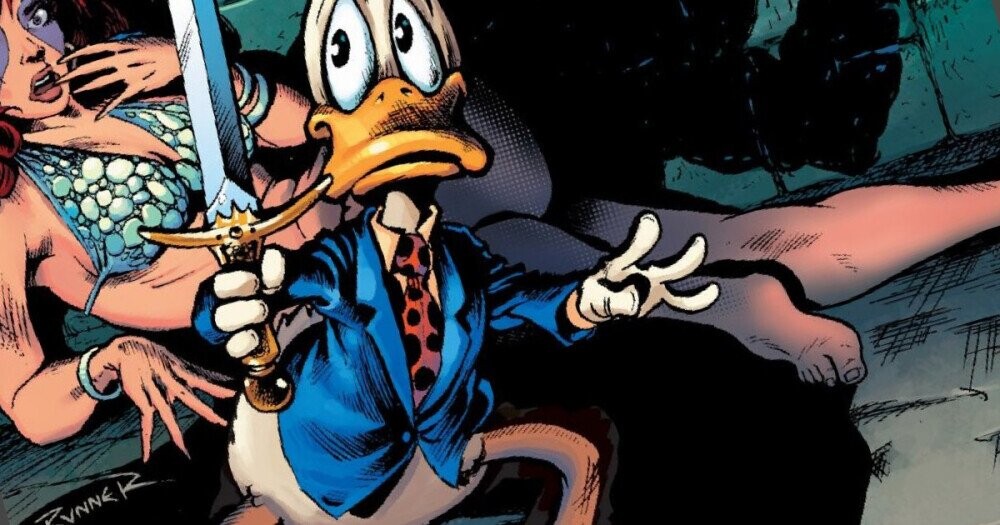
The duck was Howard the Duck, Marvel’s cigar-chomping, bad-tempered philosopher from another dimension. His early design followed a familiar funny-animal traditionshirt, jacket, hat, and no trousers. Then Disney saw something uncomfortably close to Donald Duck. Lawyers entered the room, artists received new instructions, and Howard’s carefree lower half became a corporate concern.
The episode is more than comic-book trivia. It is a compact lesson in trademark protection, visual branding, creator frustration, and the strange way legal pressure can become part of a fictional character’s identity.
Howard the Duck Was Never a Conventional Marvel Hero
Writer Steve Gerber and artist Val Mayerik introduced Howard in Adventures into Fear #19 in 1973. He arrived during a Man-Thing story as an absurd visitor from a world populated by intelligent ducks. Howard was not strong, noble, cheerful, or eager to save the universe. He was irritated, observant, lonely, and painfully aware that reality rarely made sense.
Gerber used him to satirize politics, consumer culture, moral panics, self-help movements, and ordinary American frustration. Readers responded. Howard gained his own series in 1976, a newspaper strip in 1977, and even a parody presidential campaign. He looked like a mascot but sounded like the exhausted man behind you at the Department of Motor Vehicles. Marvel’s histories still identify his original appearance as pantsless and celebrate the run as some of the company’s most iconoclastic work.
Why Disney Saw a Problem With Howard the Duck
From a distance, Howard and Donald shared obvious ingredients: white feathers, an orange bill and feet, human clothing on top, and uncovered legs below. Their stories and personalities were dramatically different, but trademark disputes often focus on recognizable commercial appearance and possible confusion, not whether two characters would enjoy the same dinner conversation.
Donald Duck was one of Disney’s most valuable icons. By mid-1977, Disney and Marvel were negotiating over Howard’s design. Later accounts describe a potential legal fight that Marvel avoided by accepting a written arrangement governing how Howard could look.
This distinction matters. The popular retelling says Disney sued Marvel and won. The better-supported version is that Disney raised infringement concerns, threatened legal action, and negotiated a design agreement. A corporation effectively dictating the acceptable shape of another company’s fictional duck is strange enough without embellishment.
The Pants Were Only Part of the Redesign
Trousers became the famous requirement because they were easy to spot and wonderfully ridiculous. Yet model sheets and guidance reportedly covered Howard’s head, bill, eyes, feet, feathers, toes, and colors. His beak became broader, his eyes changed, and his silhouette moved farther from Donald’s.
Marvel later explained that the “old” Howard would be used mainly in reprints, while the approved version would appear in new material. The revised Howard would “almost always” wear pants. The wording allowed some flexibility, but trousers became the clearest visual shorthand for compliance.
Why Pants Made a Useful Difference
Character design depends on instantly readable signals. Mickey Mouse has circular ears. Spider-Man has a web-patterned mask. Donald has a sailor outfit and famously uncovered legs. Giving Howard trousers changed his outline and proportions in one move. Even in a tiny newspaper panel, the pants announced, “This is the other angry duck.”
Artistically, however, the change was invasive. Howard’s original design borrowed the innocent visual language of funny-animal comics while his dialogue rejected that innocence. A pantsless duck discussing despair created deliberate tension. Once he dressed like a tiny office worker, the joke changedand the corporate intervention became visible on his body.
Steve Gerber Turned the Wardrobe Order Into Satire
Gerber did not quietly accept the makeover. In Howard the Duck #21, Howard confronted S.O.O.F.I.Save Our Offspring From Indecencya fanatical movement obsessed with policing morality. The group dressed him in tacky clothes because a trouserless duck was supposedly indecent. The story converted a real design restriction into a joke about censorship and people who can face an interdimensional talking bird yet decide the urgent problem is his lack of slacks.
The black-and-white Howard the Duck magazine extended the gag with Wally Sidney, a failed cartoonist turned clothing magnate who preached “animal decency.” Grand Comics Database identifies Sidney as a satire of Marvel’s dispute with Disney. Gerber could not stop the wardrobe change, but he could make the indignity part of the story.
Howard and Donald Were Opposites in Spirit
Disney’s concern made business sense, but Howard was no Donald imitation. Donald’s temper powers family comedy and slapstick. Howard’s anger comes from alienation. He understands the absurdity around him and cannot persuade anyone else to take it seriously.
Gerber built Howard for adult satire, surreal horror, political commentary, and philosophy. Beverly Switzler, his closest companion, treated him as a person rather than a novelty. That emotional core mattered. Howard was not funny merely because a duck could talk; he was funny because the duck understood human foolishness better than the humans did.
The Dispute Foreshadowed a Larger Fight Over Creative Control
The redesign arrived when comic creators had little control over work-for-hire characters. Gerber’s relationship with Marvel later collapsed amid deadlines, editorial conflict, compensation, and ownership. He was removed from Howard’s series and strip and eventually pursued a public legal battle over the character’s rights.
The Disney agreement and Gerber’s ownership case were separate disputes, but they shared a theme: Howard belonged to corporations in ways his creator did not. Marvel owned him, Disney could pressure Marvel over his appearance, and the writer who supplied his voice had limited authority over either outcome.
Gerber Later Found a Hilarious Loophole: Make Howard a Mouse
When Gerber returned for a Marvel MAX miniseries in the early 2000s, Marvel’s legal department reportedly rediscovered the written Disney restrictions. Gerber responded with a wonderfully Howard-like question: if the agreement governed Howard as a duck, what happened if he stopped being one?
The series transformed Howard into several creatures, most memorably a mousea pointed wink at Disney’s most famous mascot. The joke also tested a serious idea. Howard’s identity did not live in feathers or a bill; it lived in his personality, worldview, and voice.
Then Disney Bought Marvel and Inherited the Duck
On August 31, 2009, Disney announced an agreement to acquire Marvel Entertainment in a transaction valued at approximately $4 billion. The purchase closed on December 31, bringing more than 5,000 Marvel characters into the Disney family. Howard was now owned by the company that had once demanded changes to separate him from Donald.
The irony is almost too tidy for fiction. In the 1970s, Disney treated Howard as a possible threat. In 2009, it bought the company that owned him. The trousers remained, but the conflict became an internal family anecdote.
Howard also returned to wider pop culture. After the critically battered 1986 movie turned him into a punch line, he appeared in the post-credits scene of Guardians of the Galaxy in 2014, voiced by Seth Green. A new comic followed in 2015, restoring him as Marvel’s perpetually unimpressed outsider.
What the Howard the Duck Pants Story Really Teaches
Visual Identity Can Matter as Much as Story
Howard and Donald occupied different narrative worlds, but commercial characters are also designs. Silhouette, color, clothing, facial structure, and accessories help audiences recognize a property instantly.
Legal Pressure Can Become Canon
Marvel did not simply redraw Howard and move on. Gerber folded the makeover into stories about censorship and conformity, preserving the corporate dispute inside the fiction.
Ownership Shapes Art
Most contracts remain invisible to readers. Howard’s pants made this one visible in every panel. Once the history is known, the trousers become a wearable legal compromise.
Satire Is Difficult to Control
Disney could influence Howard’s design, but it could not force Gerber to treat the change respectfully. The more specific the restrictions became, the more material they supplied.
Experiencing the Story Today: A Reader’s 500-Word Field Guide
Reading Howard’s early appearances today is an unusually revealing experience because the change is easy to see once you know to look for it. Start with the 1973 debut and the first run of the solo comic. The original Howard has the compact, rubbery simplicity of a classic funny-animal character. His uncovered lower half barely registers as unusual because generations of cartoon ducks trained audiences not to ask logistical questions. The comedy comes from the contrast between that familiar visual language and Howard’s exhausted, adult voice.
Then move into the late-1970s material surrounding S.O.O.F.I. and Wally Sidney. Suddenly, clothing is not background decoration. It is the argument. Howard is pushed, displayed, corrected, and packaged by people claiming to protect morality or public order. Knowing the real business dispute makes the scenes land differently. A joke about animal decency becomes an artist’s protest against corporate control, smuggled into a mainstream comic by dressing the complaint as farce.
It is also worth comparing artists. Howard never looked completely identical from one creative team to another, and that inconsistency makes the design mandate more interesting. Some versions lean into the broad bill and compact body associated with the approved model. Others preserve more of the leaner, sharper Gerber-era personality. The pants remain the quickest identifier, but the tension between house style and individual interpretation survives around them.
Next, watch the 1986 filmnot necessarily because it is a masterpiece, but because it shows what happens when a cult comic’s abrasive satire is converted into an expensive studio object. The movie has defenders, impressive craft, and moments of genuine oddity, yet its reputation overwhelmed the character for years. Experiencing it after reading Gerber’s work clarifies why many fans felt the screen version captured the duck but misplaced the point. Howard was never funny merely because a duck could talk. He was funny because he understood human foolishness too well.
After that, revisit the Guardians of the Galaxy cameo. It lasts only moments, but the context changes the joke. Howard is no longer simply the hero of a failed film. He is a survivor of editorial battles, ownership disputes, design restrictions, changing media fashions, and decades of neglect. His appearance inside the Collector’s archive is almost accidentally poetic: a corporate character literally displayed as a rare object.
For artists, writers, marketers, and brand managers, the most useful exercise is to sketch two original characters with similar basic ingredients, then separate them using silhouette, clothing, posture, and facial geometry. The Howard-Donald conflict becomes immediately understandable. Distinctive characterization may matter most to readers, but design is what consumers recognize across covers, toys, posters, and tiny digital thumbnails.
Finally, notice your own reaction to the pants. Before learning the history, they look ordinary. After learning it, they become impossible to ignore. That shift demonstrates how production history can permanently alter the way art is read. Howard’s trousers are not just trousers; they are a legal compromise, an editorial scar, a running joke, and proof that even the strangest costume choice may have a boardroom hiding inside it.
Conclusion: The Duck Kept the Pants
Disney’s effort to distinguish Howard from Donald changed the character in visible and lasting ways. The immediate result was trousers and a redesigned face. The larger result was a legend about trademark anxiety, creative resistance, and corporate irony.
Howard endured because his identity never truly lived in his wardrobe. It lived in his weary intelligence and refusal to accept nonsense quietly. Disney could insist on pants; Gerber could still make the pants part of the joke.
Decades later, Disney bought Marvel and inherited the duck it once regarded as too close for comfort. Howard remained trapped in a world he never madebut at least everyone involved now answered to the same parent company. Corporate synergy: available in his size.
Historical note: The often-repeated claim that Disney formally sued Marvel and won is less precise than the documented account. Available histories support that Disney threatened legal action, negotiations began in 1977, and Marvel accepted a written design agreement.


