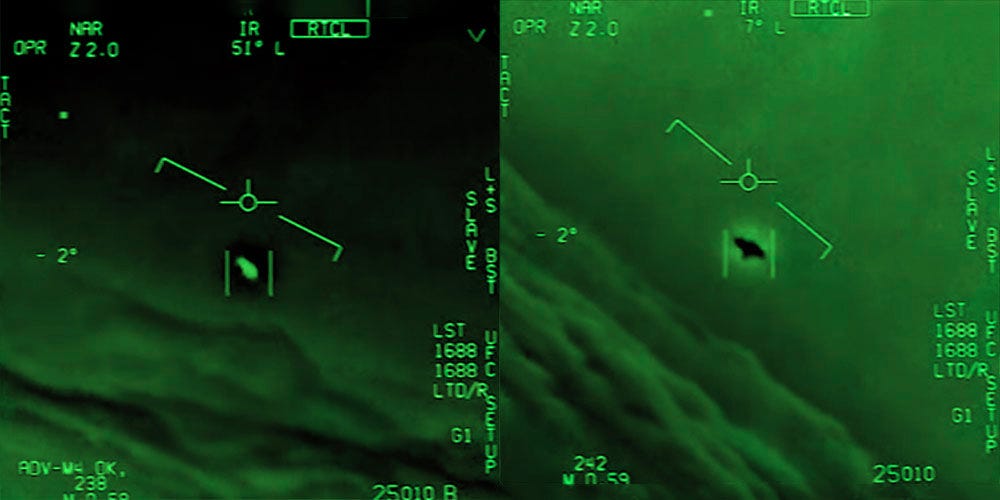

The modern UFO story has everything a great American mystery needs: Navy pilots, fuzzy videos, classified briefings, congressional pressure, a few balloons with terrible timing, and one very stubborn question: are we alone?
The latest public record from the U.S. government gives an answer that is less Hollywood and more homework: officials have not ruled out every possibility, including extraterrestrial explanations, but they have found no verified evidence that unidentified aerial phenomena, or UAP, are alien spacecraft, alien technology, or visitors from a galactic neighborhood association with poor landing etiquette.
That may sound disappointing if you were hoping for a dramatic press conference featuring a glowing saucer parked behind the Pentagon. But the actual story is more interesting. The U.S. government has moved UFOs from the realm of late-night radio and conspiracy memes into a more serious arena: national security, aviation safety, sensor data, scientific investigation, and public transparency.
In other words, the question has changed. It is no longer simply, “Are UFOs real?” The U.S. government says some observations are real in the basic sense that pilots, sensors, radar systems, and cameras recorded something. The better question is: what are those things, and why are some still unexplained?
What the U.S. UFO Report Actually Said
The landmark 2021 report from the Office of the Director of National Intelligence reviewed 144 UAP reports, mostly from U.S. Navy personnel, covering incidents from 2004 to 2021. Out of those cases, investigators could explain only one with high confidence: a large, deflating balloon. Not exactly an alien mothership, but still a reminder that the sky is full of floating nonsense.
The remaining cases could not be fully explained, largely because the available data was incomplete. That point matters. “Unexplained” does not mean “extraterrestrial.” It means investigators did not have enough reliable information to identify the object, event, sensor artifact, atmospheric condition, drone, aircraft, balloon, bird, or other possible source.
The report also noted that some UAP appeared to show unusual movement or flight characteristics. A small number of incidents involved objects that seemed to remain stationary in high winds, move against the wind, accelerate suddenly, or maneuver in ways that appeared unusual to observers. Some cases involved multiple sensors, and the report documented safety concerns, including near misses reported by pilots.
That is why the subject has become serious. Even if every UAP eventually turns out to be a drone, balloon, aircraft, natural phenomenon, sensor glitch, or misidentified object, unidentified traffic near military training areas is still a problem. If something is sharing airspace with pilots and nobody knows what it is, that is not “spooky season.” That is an aviation safety issue.
Why “No Evidence of Aliens” Is Not the Same as “Nothing Happened”
One of the easiest mistakes in UFO coverage is treating the issue as a binary choice: either aliens are here, or every witness is confused. The real world is messier. A pilot can report something honestly and still be mistaken about its distance, size, speed, or altitude. A radar return can reflect a real object or a sensor artifact. Infrared video can show something physically present without revealing exactly what it is.
Government investigators have repeatedly emphasized that many UAP cases suffer from limited data. A short video clip, a partial radar track, or a witness description may be enough to raise questions, but not enough to answer them. Science likes repeatable measurements. UFO cases often arrive as incomplete puzzles with half the pieces missing and the box lid replaced by a blurry screenshot.
That is why U.S. agencies have focused on improving reporting systems, collecting better sensor data, and reducing stigma. For years, pilots were reluctant to report unusual objects because they feared ridicule or career consequences. If people do not report what they see, investigators cannot separate the ordinary from the truly unusual.
From UFO to UAP: Why the Name Changed
The term “UFO” stands for unidentified flying object, but in recent years the government has increasingly used “UAP,” or unidentified anomalous phenomena. The newer term is broader. It can include objects or events observed in the air, in space, at sea, or possibly moving between domains.
The name change also helps remove some cultural baggage. “UFO” instantly makes many people imagine flying saucers, little green visitors, secret desert hangars, and someone’s uncle who swears he saw lights over Phoenix in 1997. “UAP” sounds like something that belongs in a policy memo, which is exactly the point. The government wants the issue studied without automatically dragging in seventy years of science fiction and internet folklore.
Still, the public understandably keeps using UFO. It is short, familiar, and much easier to say at a backyard barbecue than “unidentified anomalous phenomena.” Try saying that while holding a paper plate of ribs. Good luck.
NASA’s Role: Less Drama, Better Data
NASA entered the public UAP discussion with a 2023 independent study team report that took a scientific approach. The agency did not claim that UAP are extraterrestrial. In fact, the report found no conclusive evidence in peer-reviewed scientific literature suggesting an extraterrestrial origin for UAP.
But NASA did not dismiss the subject either. Instead, it argued that UAP research needs better data, more transparent methods, and stronger analytical tools. NASA pointed to the value of artificial intelligence, machine learning, Earth-observing systems, commercial data, pilot reports, and public engagement.
That approach is important because NASA’s strength is not chasing rumors. NASA’s strength is measurement. If a strange object is reported, scientists want to know: where was it, when was it observed, what sensors detected it, what was the weather, what aircraft were nearby, what satellites passed overhead, what drones were operating, and what ordinary explanations can be tested first?
NASA also appointed a director of UAP research to help coordinate its work with broader federal efforts. That does not mean NASA is hunting alien spacecraft behind every cloud. It means the agency recognizes that unexplained observations deserve a disciplined scientific process.
AARO and the Pentagon’s Historical Review
The All-domain Anomaly Resolution Office, known as AARO, was created to coordinate UAP investigations across the Department of Defense and the intelligence community. AARO’s work includes analyzing new reports, reviewing historical records, and evaluating claims that the government has recovered or hidden extraterrestrial technology.
In 2024, AARO released a historical report reviewing U.S. government investigations of UFO and UAP claims dating back decades. Its conclusion was direct: investigators found no verifiable evidence that any UAP sighting represented extraterrestrial activity, and no verifiable evidence that the U.S. government or private industry has possessed extraterrestrial technology.
That finding does not mean every case is solved. It means that after reviewing available records, classified and unclassified materials, and witness claims, AARO did not find proof of alien spacecraft, recovered alien bodies, or secret reverse-engineering programs involving off-world technology.
For UFO believers, that conclusion may feel like another government denial. For skeptics, it may sound obvious. For everyone else, it is a reminder that extraordinary claims require more than sincere testimony, dramatic language, or a grainy object doing something weird on video.
The 2024 Annual UAP Report: Hundreds of New Cases, Same Core Finding
The Fiscal Year 2024 UAP report added hundreds of new cases to the government’s growing catalog. AARO received 757 reports during the covered period, including 485 incidents that occurred during that timeframe and 272 older incidents that had not been previously included. The total number of cases under review rose to more than 1,600.
Many reports were resolved as ordinary objects or phenomena, including balloons, birds, drones, satellites, and aircraft. Hundreds of others remain unresolved, often because they lack enough scientific data for confident analysis. A small percentage of cases continue to merit deeper investigation because they appear potentially anomalous after initial review.
That is the heart of the matter. The U.S. government is not saying, “Nothing to see here.” It is saying, “We have many reports, some are explainable, some are not yet explainable, and so far none proves extraterrestrial beings, activity, or technology.”
Why the Government Still Takes UAP Seriously
If there is no evidence of aliens, why keep investigating? Because national security does not require aliens to be concerned.
A UAP near a military base could be a drone operated by a hobbyist, a commercial aircraft, a foreign surveillance system, a classified U.S. platform, a sensor error, or something else entirely. In every case, officials want to know what it is. The airspace around military training ranges, nuclear facilities, naval exercises, and commercial flight paths is not the place for mystery objects to play hide-and-seek.
The government’s list of possible explanations includes airborne clutter, natural atmospheric phenomena, U.S. government or industry technology, foreign adversary systems, and an “other” category for cases that do not fit neatly anywhere. That “other” bucket is where public imagination tends to throw on sunglasses and start humming the theme from a sci-fi movie. But investigators treat it more carefully: it is simply the category for unresolved cases.
Why So Many UFO Reports Remain Unexplained
Most people underestimate how difficult it is to identify something in the sky. A small object close to the observer can look like a large object far away. A balloon can seem to move strangely when viewed from a fast-moving aircraft. A drone can appear silent if it is far enough away. A bird on infrared video can look oddly mechanical. A satellite can flare in sunlight. A sensor can produce artifacts that look more mysterious than the object itself.
Distance, speed, altitude, angle, lighting, weather, camera limitations, and human perception all matter. The sky is a giant three-dimensional theater, and our brains are not always great at judging what is happening on the stage.
That is why investigators want multiple data streams. A witness report is useful. A video is better. A video plus radar plus infrared plus location data plus weather conditions plus aircraft tracking is much better. Without that layered evidence, even competent analysts may be unable to reach a firm conclusion.
What About Whistleblower Claims?
Recent years have brought high-profile claims from former officials and military personnel alleging that the U.S. government has hidden recovered craft or secret programs. These claims drew congressional interest and public attention. They also raised an obvious question: if such programs exist, where is the verifiable evidence?
AARO has stated that it found no evidence that the U.S. government or contractors possessed extraterrestrial technology. The Pentagon has also denied claims of hidden alien retrieval programs. That does not automatically settle the debate for everyone, especially those who distrust official statements. But for publication, journalism, and serious analysis, the distinction matters: claims are not the same as proof.
Congressional hearings can be valuable because they force agencies to answer questions, preserve testimony, and clarify procedures. But the public should separate compelling testimony from confirmed evidence. A dramatic claim may deserve investigation. It does not deserve automatic belief.
The Cultural Power of UFOs
UFOs occupy a special place in American culture because they sit at the intersection of science, secrecy, fear, hope, and entertainment. They allow people to imagine that reality is bigger than official explanations. They also reflect mistrust in institutions, fascination with space, and the very human desire to believe that someone, somewhere, knows the answer.
From Roswell to Area 51, from “The X-Files” to viral cockpit videos, UFO stories have become part of the national imagination. That cultural power can help and hurt. It keeps public interest alive, but it can also blur the line between evidence and entertainment.
The best approach is neither blind belief nor lazy dismissal. It is curiosity with standards. Ask questions. Demand transparency. Respect witnesses. Check data. Rule out ordinary explanations first. And remember that “I don’t know” is not a failure. In science, “I don’t know yet” is often where the real work begins.
What Would Count as Evidence?
If extraterrestrial technology were ever confirmed, the evidence would need to be strong, testable, and independently verifiable. That could include recovered materials with impossible-to-explain composition, high-quality sensor data from multiple independent systems, repeatable observations, clear chain of custody, and analysis by qualified experts across disciplines.
A single blurry video would not be enough. A confident witness would not be enough. A leaked memo of uncertain origin would not be enough. The bigger the claim, the stronger the proof must be.
This is not unfair skepticism. It is the same standard that protects the public from misinformation. Nobody wants the most important discovery in human history to be based on a misread sensor, a balloon, or a bird having its dramatic moment.
Experiences and Lessons Connected to the UFO Report
The most relatable part of the UFO report is not the classified annex, the agency acronyms, or the debate over extraterrestrial technology. It is the human experience of looking up and seeing something that does not immediately make sense. Almost everyone has had a version of that moment. A bright light moves across the sky. A strange shape glides at dusk. Something flashes, pauses, or seems to change direction. For a few seconds, the brain opens every file labeled “mystery.”
That experience is powerful because the sky is both familiar and unreachable. We see it every day, but we rarely understand everything happening in it. Commercial jets cross above us. Satellites reflect sunlight. Weather balloons drift quietly. Drones appear where drones did not exist twenty years ago. Military aircraft train in restricted areas. Meteors burn up in seconds. Add cloud cover, city lights, poor depth perception, and smartphone zoom, and even ordinary objects can put on a very convincing alien costume.
One lesson from the U.S. UFO report is humility. Trained pilots can see things they cannot identify. Sophisticated sensors can record data that analysts cannot immediately explain. Government agencies can review decades of material and still say, “We need better information.” That humility is not weakness. It is intellectual honesty. The sky is complicated, and certainty should be earned.
Another lesson is that reporting matters. If a pilot sees an unknown object near a training range, that report could prevent a collision or reveal a drone problem. If commercial pilots, military personnel, or trained observers report UAP without stigma, investigators get better data. Better data leads to better explanations. Better explanations reduce speculation. That is how mystery becomes knowledge, even when the answer is less thrilling than “aliens parked illegally.”
There is also a media literacy lesson. UFO stories spread fast because they are exciting, visual, and emotionally charged. A short clip online can look stunning without context. But responsible readers should ask basic questions: Who recorded it? Where and when? Was the full video released? Were flight trackers, weather data, satellite paths, or sensor limitations checked? Has any independent expert reviewed it? In the UFO world, curiosity is good; instant certainty is usually the villain wearing a cape.
For many people, the topic also inspires wonder. Even without evidence that UAP are alien craft, the search for life beyond Earth remains scientifically legitimate. NASA studies planets, moons, atmospheres, and biosignatures because the universe is enormous and the possibility of life elsewhere is a serious scientific question. The UAP report does not kill that wonder. It simply says that current UAP evidence has not proven alien visitation.
The healthiest experience to take from the UFO debate is balanced curiosity. Look up. Ask questions. Enjoy the mystery. But bring a flashlight of evidence, not just a backpack full of assumptions. The truth, whatever it is, deserves better than panic, mockery, or clickbait. It deserves patience.
Conclusion: The Mystery Remains, But the Evidence Has Limits
The U.S. UFO report did not close the book on unidentified aerial phenomena. It opened a more serious chapter. The government has acknowledged that some reports remain unresolved, that pilots and sensors have recorded unusual observations, and that better data collection is needed.
At the same time, official investigations have not found verified evidence of extraterrestrial beings, alien spacecraft, recovered off-world technology, or secret reverse-engineering programs. The most accurate summary is simple: the U.S. does not rule out every possibility, but it has found no evidence proving aliens are behind UAP.
That answer may not satisfy everyone. It is less dramatic than a flying saucer reveal and less comforting than a total explanation. But it is honest. Some cases remain unknown. Unknown does not mean alien. It means the investigation continues.
Note: This article synthesizes public information from official U.S. reports and reputable American reporting, including ODNI, NASA, AARO, the Department of Defense, Reuters, AP, CBS News, ABC News, Axios, PBS, Smithsonian Magazine, and science-focused U.S. publications. Source links are intentionally not embedded for clean web publication.


