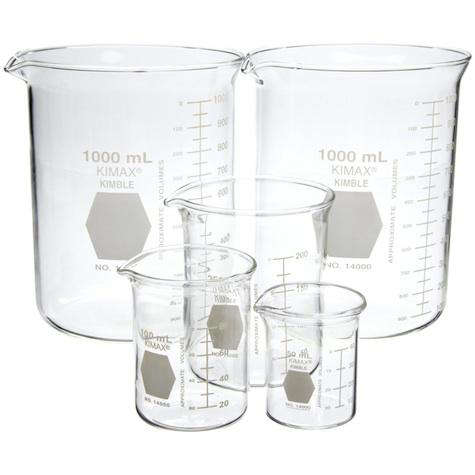

Every laboratory has a few quiet heroes. The centrifuge gets the drama, the microscope gets the glamour, and the fume hood gets the “please do not explode” energy. But sitting calmly on the bench, ready for mixing, heating, rinsing, measuring, and occasionally rescuing a chaotic experiment from becoming a puddle, is the humble beaker. The Kimble KIMAX Beaker Starter Pack is built for that exact everyday role: dependable glassware for labs that need practical sizes, durable construction, and fewer purchasing headaches.
Whether you are outfitting a teaching lab, a start-up research space, a quality-control bench, or a small testing area, a beaker starter pack solves a very real problem: nobody wants to order five different beaker sizes one by one while also wondering whether they picked compatible glassware. KIMAX starter packs bring popular sizes together in one neat set, so a new lab can get to work faster and with fewer “where is the 600 mL beaker?” moments.
What Is the Kimble KIMAX Beaker Starter Pack?
The Kimble KIMAX Beaker Starter Pack is a set of laboratory beakers made under the KIMBLE brand by DWK Life Sciences. KIMAX glassware is widely known in scientific and educational settings for its borosilicate glass construction, practical lab design, and compatibility with routine bench work. In plain English: these are the glass beakers you buy when you want fewer surprises and more reliable pours.
The heavy-duty beaker starter pack commonly includes four low-form Griffin beakers: 250 mL, 400 mL, 600 mL, and 1000 mL. These sizes cover a useful range of common tasks, from preparing small solutions to mixing larger batches. The beakers are designed with pouring spouts and double capacity scales, making them suitable for general measuring, mixing, stirring, heating, and handling liquids where approximate volume readings are enough.
There is also a low-form Griffin beaker starter pack variation that includes five popular sizes: 50 mL, 100 mL, 250 mL, 600 mL, and 1000 mL. That option is especially handy for educational labs, demonstration benches, or small facilities that want a broader size spread without purchasing full cases of every size.
Why KIMAX Borosilicate Glass Matters
The phrase “borosilicate glass” may sound like something a wizard says before turning a pumpkin into a pH meter, but it matters. KIMAX beakers are manufactured from borosilicate glass 3.3, a lab-grade glass valued for thermal resistance, chemical durability, and clarity. Compared with ordinary soda-lime glass, borosilicate glass is better suited for laboratory use because it handles temperature changes and chemical exposure more gracefully.
In practical terms, borosilicate glass helps reduce the risk of cracking during routine heating and cooling. That does not mean it is magic or indestructible. A beaker can still break if abused, dropped, heated unevenly, or shocked with extreme temperature changes. But for daily lab procedures, borosilicate glass provides the toughness and stability expected in serious scientific glassware.
Key Features of the Kimble KIMAX Beaker Starter Pack
1. Popular Sizes in One Purchase
The main advantage of a starter pack is convenience. Instead of building a beaker collection piece by piece, the pack gives you the sizes most labs reach for first. A 250 mL beaker works well for small preparations, a 400 mL beaker fills the middle ground, a 600 mL beaker is a bench favorite, and a 1000 mL beaker handles larger mixes without feeling like you are stirring soup in a teacup.
2. Heavy-Duty Low-Form Griffin Design
Low-form Griffin beakers are short, wide, and stable. That shape makes them useful for stirring, heating on a hot plate, cooling, and general bench work. The heavy-duty version adds extra confidence for labs where glassware sees frequent use. In a busy environment, glassware is handled by many hands, moved between benches, washed often, and occasionally placed down with more enthusiasm than necessary. Heavy-duty construction helps.
3. Pouring Spout for Cleaner Transfers
A pouring spout may seem like a tiny feature until you use a beaker without one. Then suddenly every transfer becomes a suspense film. The spout on Kimble KIMAX beakers helps guide liquids into flasks, cylinders, bottles, or waste containers with better control. It will not fix careless technique, but it does make careful technique easier.
4. Approximate Graduations
Kimble KIMAX beakers feature easy-to-read graduations for approximate volume measurement. This is important wording. Beakers are not precision volumetric instruments. They are excellent for mixing, holding, heating, and rough measurement, but when exact volume matters, use a graduated cylinder, volumetric flask, pipette, or burette. Think of beaker graduations as helpful guidance, not a courtroom witness.
5. Compliance and Lab-Grade Standards
KIMAX laboratory glassware is associated with recognized glassware standards, including ASTM-related specifications and USP Type I references for certain borosilicate products. For purchasing teams, lab managers, and regulated environments, those details matter because they help confirm the glassware is intended for scientific use rather than decorative “science-core” shelving.
Who Should Buy a Kimble KIMAX Beaker Starter Pack?
The Kimble KIMAX Beaker Starter Pack is ideal for new labs, teaching spaces, small research groups, quality-control departments, and organizations that need durable general-purpose beakers without overbuying. It is also a smart choice for labs with limited storage space. Instead of ordering full cases of multiple sizes, a starter pack gives you a balanced selection.
For a university lab, the pack can serve as a practical setup for student experiments. For a start-up lab, it provides essential bench glassware while budgets are still being guarded like dragon treasure. For an industrial testing area, it offers reliable beakers for routine preparation, rinsing, sample handling, and solution mixing.
Common Uses for Kimble KIMAX Beakers
Beakers are among the most flexible tools in the lab. A Kimble KIMAX beaker can be used for preparing solutions, dissolving solids, heating liquids, collecting filtrates, holding samples temporarily, rinsing small tools, and organizing materials during a procedure. They are also useful during demonstrations because the transparent glass allows observers to see color changes, precipitates, bubbling, layering, or other visual reactions.
In chemistry labs, a beaker might hold a buffer solution, salt solution, reagent mixture, or rinse water. In biology labs, it may be used for media preparation steps, water baths, or sample handling. In environmental testing, beakers help with dilution, settling, and prep work. In classroom labs, they become the workhorse vessel for teaching measurement, solubility, pH, and safe heating practices.
Kimble KIMAX vs. Generic Beaker Sets
Generic beaker sets can be tempting because they often cost less. For casual demonstrations or low-risk household science activities, a basic borosilicate set may be enough. But in a working lab, consistency matters. KIMAX beakers come from a recognized laboratory glassware brand with established product lines, documented specifications, and distributor support.
The difference is not always dramatic on day one. Both a generic beaker and a KIMAX beaker can hold blue liquid and make you feel like a scientist in a movie. The difference becomes clearer over time: readability of graduations, glass consistency, edge finishing, thermal performance, purchasing documentation, and confidence that replacements will match the original equipment.
How to Choose the Right Starter Pack
Start by considering your lab’s daily volume range. If your team often works with small samples, a low-form Griffin starter pack that includes 50 mL and 100 mL beakers may be useful. If your work involves frequent heating, mixing, or handling of mid-size to larger preparations, the heavy-duty pack with 250 mL through 1000 mL sizes may be the better fit.
Storage space is another factor. Beakers nest somewhat, but they still take up cabinet room, especially when you buy full cases. Starter packs reduce clutter by giving you fewer, more purposeful pieces. For labs that are still figuring out workflow, this is a major benefit. You can always expand later once you know which sizes disappear from the shelf first.
Safety Tips for Using KIMAX Beakers
Even excellent lab glassware needs respectful handling. Inspect each beaker before use. Look for chips, cracks, star fractures, or scratches near the rim and base. Damaged glassware should be removed from service because small flaws can become big problems during heating or stirring.
Avoid sudden temperature changes. Do not take a hot beaker from a hot plate and place it directly on a cold metal surface or into cold water. Use appropriate pads, tongs, heat-resistant gloves, and gradual cooling whenever needed. When heating liquids, use proper ventilation and never seal a beaker with a tight lid. A beaker is not a pressure vessel, and it has no interest in becoming one.
Always choose the right tool for the measurement. If an experiment requires a precise 100.00 mL volume, do not rely on beaker graduations. Use volumetric glassware. Beakers are great at many things, but precision volume measurement is not their starring role.
Cleaning and Care
Proper cleaning extends the life of Kimble KIMAX beakers. Rinse immediately after use when possible, especially after sticky, staining, or crystallizing solutions. Use lab-approved detergents and soft brushes that will not scratch the glass. For stubborn residue, follow your lab’s chemical cleaning procedures rather than improvising like a sitcom character with a mystery bottle.
After washing, rinse thoroughly with appropriate water quality for your application. For general use, tap water followed by deionized water may be sufficient. For analytical work, stricter cleaning protocols may apply. Dry beakers inverted on a clean rack or in a suitable drying oven, depending on lab procedure and glassware compatibility.
Best Practices for Lab Managers
If you manage a lab, standardizing on a dependable beaker line can simplify inventory. Keep a small reserve of the most-used sizes and track breakage patterns. If 600 mL beakers vanish faster than snacks in a break room, order extra. If 1000 mL beakers sit untouched, you may not need a large stock.
Label cabinets by size, train users to return clean glassware to the right location, and keep chipped items out of circulation. A beaker starter pack is not just a purchase; it is the beginning of a glassware system. With good habits, that system saves time, reduces frustration, and keeps experiments moving.
Real-World Experience With a Beaker Starter Pack
Using a Kimble KIMAX Beaker Starter Pack in a new lab feels a lot like moving into a new kitchen and finally buying the right pans. Before the starter pack, people often improvise. A 1000 mL beaker gets used for 120 mL of liquid because it is the only clean one nearby. A tiny beaker gets overloaded because someone is “pretty sure it will fit.” Then the stir bar starts tap-dancing, the liquid creeps toward the rim, and everyone suddenly remembers why proper sizing matters.
A balanced starter pack changes that rhythm. The 250 mL beaker becomes the quick-grab option for small reagent prep, test solutions, and quick dissolving steps. The 400 mL beaker fills the awkward middle zone where 250 mL feels cramped but 600 mL feels dramatic. The 600 mL beaker often becomes the everyday favorite because it offers enough room for stirring without taking over the bench. The 1000 mL beaker is perfect for larger mixes, rinse water, and procedures where splash room matters.
In teaching labs, the benefit is even more obvious. Students learn faster when the equipment makes sense. A beaker with clear graduations and a stable low-form shape helps beginners understand volume, mixing, and safe pouring. The pouring spout is a small but valuable teacher: it encourages controlled transfers instead of the classic beginner technique known as “hope and gravity.”
In a start-up lab, the starter pack also helps with budgeting. Early-stage labs often need everything at once: pipettes, gloves, bottles, balances, stir plates, racks, labels, waste containers, and probably more coffee than the purchasing policy allows. Buying a beaker starter pack keeps glassware simple. You get useful sizes without committing to large case quantities before you know your workflow.
Another practical experience is storage. A random collection of beakers from different brands, ages, and shapes can become annoying. Some nest poorly. Some graduations are fading. Some rims are rough. A starter pack creates a clean baseline. The pieces look and behave consistently, which makes the bench feel more organized. That may sound minor, but organized glassware reduces wasted time. Nobody enjoys searching through a cabinet like an archaeologist looking for one clean 400 mL beaker.
The heavy-duty feel is also reassuring. Lab glassware should never be handled carelessly, but it should be able to survive normal daily use. KIMAX beakers are not invincible, and anyone who says glass cannot break has clearly never met a tile floor. Still, the combination of borosilicate glass, low-form stability, readable markings, and practical sizing makes the starter pack feel like a sensible long-term purchase rather than a temporary patch.
The best advice from real bench experience is simple: buy the starter pack, then watch usage for a month. Which size is always in the sink? Which one is always on the hot plate? Which one never leaves the cabinet? That observation tells you what to order next. The Kimble KIMAX Beaker Starter Pack gives you a strong starting point, and your daily workflow tells you how to expand.
Conclusion
The Kimble KIMAX Beaker Starter Pack is a practical, durable, and lab-friendly choice for anyone setting up or refreshing a laboratory workspace. Its borosilicate glass construction, popular size selection, low-form Griffin design, pouring spouts, and approximate graduations make it useful across chemistry, biology, teaching, quality-control, and general research environments.
It is not the flashiest item in the lab, but that is the charm. A good beaker starter pack does not need to impress anyone with blinking lights. It simply needs to be there, clean, readable, stable, heat-ready, and sized correctly when the experiment begins. KIMAX does that job well, which is why the starter pack deserves a serious look from new labs, small teams, and anyone tired of pretending one lonely beaker can do everything.