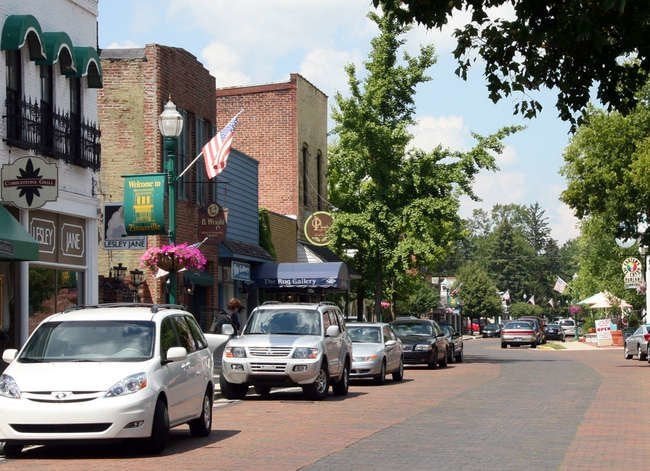

Imagine living somewhere the police blotter is less gripping than the minutes from the zoning-board meeting. Across the United States, a surprising collection of towns and small cities report crime rates so low that a misplaced garden gnome might qualify as the neighborhood scandal of the month.
This updated guide revisits the idea behind the popular Bob Vila feature by using the latest complete nationwide crime data available for comparison. The communities below combine extremely low reported violent crime with remarkably limited property crime. Many also offer preserved open space, historic neighborhoods, strong civic participation, and the kind of community calendar where a pancake breakfast can achieve blockbuster status.
Still, no community is literally crime-free. Statistics reflect offenses reported to participating law-enforcement agencies, and they cannot measure every aspect of personal safety. Treat this list as a well-researched starting pointnot a magical force field around your future house.
How These Low-Crime Places Were Selected
The rankings are based on reported violent and property crimes per 1,000 residents. Violent crime generally includes murder, rape, robbery, and aggravated assault, while property crime includes burglary, theft, and motor-vehicle theft.
To reduce the distortion that can occur when a hamlet has only three residents and one extremely responsible squirrel, the underlying analysis applies a minimum population threshold and includes only agencies that submitted complete reports. The national ranking uses 2024 FBI crime information, the most recent complete annual dataset available when the 2026 list was prepared.
For context, the communities in the broader top-100 group averaged approximately 0.2 violent crimes and 2.2 property crimes per 1,000 residents. Those figures were dramatically below the corresponding national rates. Here are the first 19 communities in that ranking.
19 Places in America With Remarkably Low Crime
-
Shawangunk, New York
Reported rates: 0.0 violent crimes and 0.4 property crimes per 1,000 residents.
Shawangunk leads the list with the statistical equivalent of a whisper. Located in New York’s Hudson Valley, the town offers rural roads, farms, historic communities, and access to the dramatic Shawangunk Ridge. Nearby recreation includes hiking, waterfalls, carriage roads, and mountain views at Minnewaska State Park Preserve. It is a strong option for people who want nature without moving completely beyond civilization’s Wi-Fi signal.
-
Emerson, New Jersey
Reported rates: 0.0 violent crimes and 0.9 property crimes per 1,000 residents.
Emerson calls itself “The Family Town,” and its quiet residential streets help explain the nickname. This Bergen County borough combines parks, recreation programs, schools, a public library, local shopping, and rail access within the Pascack Valley. It delivers small-town familiarity while keeping New York City within commuting distancea combination many home buyers pursue with the intensity of an Olympic event.
-
Campton Hills, Illinois
Reported rates: 0.1 violent crimes and 0.5 property crimes per 1,000 residents.
Campton Hills is a spacious village west of Chicago known for low-density development, winding roads, and open land. Local planning has emphasized rural character and preservation rather than squeezing a strip mall onto every available corner. Residents get peaceful neighborhoods and access to the wider Fox River Valley, while Chicago remains close enough for work, museums, sports, and emergency deep-dish pizza.
-
Chester, New York
Reported rates: 0.1 violent crimes and 0.3 property crimes per 1,000 residents.
Chester sits in Orange County, roughly 60 miles north of New York City. Its landscape blends established neighborhoods, farmland, historic sites, and the artisan community of Sugar Loaf. The area offers a quieter daily rhythm without cutting residents off from regional employment centers. Its exceptionally low property-crime rate is especially notable for a community within reach of a major metropolitan area.
-
Allendale, New Jersey
Reported rates: 0.0 violent crimes and 1.2 property crimes per 1,000 residents.
Allendale pairs suburban convenience with enough old-fashioned charm to make Main Street look prepared for a holiday movie. The borough’s attractions include Crestwood Lake and the Celery Farm, a 107-acre preserved wetland visited by hundreds of bird species. Community events, recreation programs, commuter rail service, and volunteer organizations contribute to a town culture where residents have plenty of opportunities to know their neighbors.
-
Upper Makefield Township, Pennsylvania
Reported rates: 0.0 violent crimes and 1.2 property crimes per 1,000 residents.
Upper Makefield occupies a scenic corner of Bucks County along the Delaware River. The township includes historic villages, preserved landscapes, walking routes, and Washington Crossing Historic Park, where George Washington’s famous 1776 river crossing is commemorated. Homes can be expensive, but buyers are paying for history, greenery, space, and crime statistics that are almost suspiciously well behaved.
-
Hawthorn Woods, Illinois
Reported rates: 0.0 violent crimes and 1.3 property crimes per 1,000 residents.
Hawthorn Woods is a residential village in Lake County with generous open space, park facilities, community programs, and a full-service local police department. The village maintains numerous park sites and promotes a landscape-centered identity. It appeals to households seeking larger properties and a relaxed suburban setting while remaining connected to employment and entertainment across the Chicago region.
-
Broadview Heights, Ohio
Reported rates: 0.1 violent crimes and 1.0 property crimes per 1,000 residents.
Broadview Heights is a Cleveland suburb with nearly 20,000 residents, making its low reported crime rates particularly impressive. Local recreation facilities include athletic fields, playgrounds, courts, a splash park, and indoor fitness amenities. The city combines established neighborhoods with access to the cultural, medical, and employment resources of Greater Cleveland. In other words, it is quiet without requiring residents to churn their own butter.
-
Millis, Massachusetts
Reported rates: 0.1 violent crimes and 0.9 property crimes per 1,000 residents.
Millis offers classic Massachusetts small-town living within commuting range of Boston and Providence. Its neighborhoods, schools, athletic fields, local businesses, and community services create an environment that feels residential rather than isolated. The town is particularly appealing to people who want New England scenery and metropolitan access but would prefer their evening soundtrack to feature crickets instead of car horns.
-
Boxford, Massachusetts
Reported rates: 0.0 violent crimes and 1.4 property crimes per 1,000 residents.
Boxford is a geographically large, rural town with very little commercial development. Wooded properties, farms, preserved land, and an extensive trail network define much of its character. The trade-off is that residents usually need a car for shopping and services. The reward is privacy, natural scenery, and the rare ability to look out a window without making direct eye contact with six billboards.
-
Columbus, Indiana
Reported rates: 0.1 violent crimes and 0.8 property crimes per 1,000 residents.
With more than 51,000 residents, Columbus is the largest community among these 19 places. It is internationally known for modern architecture, public art, and buildings designed by influential architects. Residents enjoy the amenities of a genuine small cityincluding employers, restaurants, parks, cultural events, and healthcarewhile benefiting from crime rates more commonly associated with much smaller towns.
-
Atkinson, New Hampshire
Reported rates: 0.1 violent crimes and 0.9 property crimes per 1,000 residents.
Atkinson describes itself as a quiet bedroom community in southern New Hampshire. It offers wooded neighborhoods, conservation land, local trails, and convenient access to employment centers in both New Hampshire and Massachusetts. This is not the place for someone demanding a nightclub beneath every apartment. It is much better suited to residents who consider an uncrowded trail and an early bedtime premium amenities.
-
Frostburg, Maryland
Reported rates: 0.1 violent crimes and 1.0 property crimes per 1,000 residents.
Frostburg brings college-town energy to the mountains of Western Maryland. Home to Frostburg State University, it has a walkable Main Street, local events, Appalachian character, and direct connections to outdoor recreation. City parks provide athletic facilities, playgrounds, ponds, trails, an amphitheater, and a connector to the Great Allegheny Passage. The result is a safe community that is peaceful without becoming sleepy.
-
Chesterfield Township, New Jersey
Reported rates: 0.2 violent crimes and 0.8 property crimes per 1,000 residents.
Chesterfield Township has deep agricultural and Quaker roots, with settlement dating to the 17th century. Historic preservation remains an important local priority even as newer housing has appeared. Its location in Burlington County provides access to Philadelphia, Trenton, and major regional highways. Residents get preserved heritage, open landscapes, and a community small enough that forgetting someone’s name at the grocery store may require tactical maneuvering.
-
Vernon Township, New Jersey
Reported rates: 0.0 violent crimes and 1.7 property crimes per 1,000 residents.
Vernon is the outdoors enthusiast of the group. Federal and state parkland crosses the township, along with roughly 20 scenic miles of the Appalachian Trail. Hiking, skiing, biking, golf, and seasonal recreation give the community a four-season tourism economy. Its population is larger and more geographically spread out than many places on this list, yet its reported violent-crime rate remained at zero.
-
Eliot, Maine
Reported rates: 0.0 violent crimes and 2.0 property crimes per 1,000 residents.
Eliot sits beside the Piscataqua River near the New Hampshire border. Its history includes shipbuilding, fishing, farming, and brickmaking, while its present-day appeal comes from rural scenery and proximity to Portsmouth, Kittery, and the southern Maine coast. It suits residents who appreciate New England history, river views, and the comforting possibility that the most aggressive local resident may be a territorial seagull.
-
Pingree Grove, Illinois
Reported rates: 0.1 violent crimes and 1.6 property crimes per 1,000 residents.
Pingree Grove is a growing community in Kane County, northwest of Chicago. Much of its recent development consists of planned residential neighborhoods, parks, trails, and family-oriented amenities. Growth can bring traffic and infrastructure challenges, but the village has maintained extremely low reported crime. It may appeal to buyers who prefer newer construction and suburban organization over the quirks of a centuries-old town.
-
Litchfield, New Hampshire
Reported rates: 0.1 violent crimes and 1.5 property crimes per 1,000 residents.
Litchfield lies along the Merrimack River between Manchester and Nashua. The town combines residential neighborhoods with farms, open land, and local recreation. Its location gives commuters access to two of New Hampshire’s largest employment centers while preserving a distinctly small-town atmosphere. Weekend plans here are more likely to involve a farm stand or youth game than a complicated parking strategy.
-
Weston, Connecticut
Reported rates: 0.0 violent crimes and 2.2 property crimes per 1,000 residents.
Weston is a wooded Fairfield County town known for spacious properties, preserved land, community services, and limited commercial development. It offers privacy and greenery while remaining within reach of coastal Connecticut and New York City. Housing costs are substantial, and errands may require driving, but residents receive an unusually quiet environment where dense woods are more common than dense apartment blocks.
Why Do These Communities Report So Little Crime?
There is no single recipe for creating a low-crime town. However, many places on this list share several characteristics: modest population sizes, primarily residential development, strong municipal services, high levels of community participation, and substantial open space. Some are affluent suburbs, while others are rural towns or small regional centers.
Geography also matters. Numerous entries are located in the Northeast or near major metropolitan areas without being part of the urban core. Residents can reach jobs and cultural amenities while living in communities with lower density and fewer commercial districts. That does not prove that small size or wealth automatically prevents crime, but it helps explain why certain communities repeatedly appear in safety rankings.
What Living in an Almost-Zero-Crime Town Can Feel Like
The First Experience: Quiet Feels Surprisingly Loud
A newcomer may initially notice what is missing. There may be fewer sirens, less late-night traffic, and little commotion outside local businesses. After several evenings, the silence becomes its own presence. You hear wind moving through trees, a basketball bouncing two streets away, or somebody attempting to reverse a boat trailer with heroic optimism.
That quiet can be deeply relaxing, especially for people arriving from crowded urban neighborhoods. It can also feel strange. A person accustomed to constant activity may briefly wonder whether everyone has received an evacuation notice that somehow missed their phone.
Neighbors Often Become Part of the Security System
In many small communities, informal observation plays an important role. Neighbors recognize familiar cars, notice an open garage door, and know when an elderly resident usually collects the mail. This does not mean everyone is spying through lace curtains. It means routine interactions create awareness.
The benefit is practical. A package left outside may be moved out of the rain. A wandering dog may be returned before its owner finishes posting online. The downside is that your experimental purple mailbox will probably receive immediate public review.
Daily Life May Feel Safer, but Good Habits Still Matter
Low crime sometimes encourages residents to become casual about locking doors, securing bicycles, or protecting valuables. That is understandable, but statistics never grant immunity to an individual household. Even the safest communities experience theft, fraud, domestic violence, vandalism, and occasional serious offenses.
A responsible resident still locks doors, uses outdoor lighting, protects online accounts, and researches specific neighborhoods. The goal is to enjoy peace of mind without converting peace of mind into complete inattention.
The Trade-Off Is Often Convenience
Several communities on this list preserve safety and tranquility partly because they have little nightlife, limited public transportation, or few large commercial centers. Residents may drive farther for groceries, specialist healthcare, or entertainment. Food delivery options can become surprisingly philosophical: technically available, but not necessarily willing to come all the way to your house.
For families, remote workers, retirees, hikers, and people who enjoy home-centered lifestyles, this trade-off may be easy. For someone who wants to walk downstairs at midnight for ramen, live music, and a bookstore open until 2 a.m., rural Boxford may require emotional adjustment.
Community Events Carry More Weight
In a low-crime small town, seasonal festivals, school games, farmers markets, parades, library programs, and recreation leagues can become the social backbone of community life. These activities give residents repeated opportunities to build relationships. Familiarity can increase trust, strengthen local networks, and encourage people to report problems before they grow.
Visitors sometimes mistake this rhythm for boredom. Residents may see it differently. When daily life is stable, ordinary pleasures receive more attention: a trail after work, a conversation at the post office, a child biking to a friend’s house, or a community concert where the biggest crisis is an unexpectedly aggressive mosquito.
A Safe Town Is Not Automatically the Right Town
Crime statistics should be considered alongside housing prices, taxes, employment, schools, healthcare, transportation, climate, social life, and personal identity. Some places on this list are expensive. Others have long commutes, harsh winters, sparse shopping, or limited rental inventory.
The best experience comes from matching the community to the resident. Spend time there during ordinary weekdays, not only during a sunny festival. Test the commute, visit local stores, inspect mobile coverage, and speak with residents. A remarkably low crime rate is valuable, but happiness usually requires more than a quiet police scanner.
Conclusion
These 19 communities demonstrate that remarkably low reported crime exists in many forms. Some are rural New England towns, some are carefully planned suburbs, and one is an internationally recognized center of modern architecture. Their common advantage is not perfection but a measurable level of public safety that stands far below national crime rates.
Anyone considering a move should verify the newest local data, compare individual neighborhoods, visit at different times, and evaluate the full cost of living. Crime rankings are useful filters, but they are not substitutes for firsthand research. After all, the safest town in America is only a good home when it also fits your budget, work, family, and preferred distance from the nearest decent taco.
SEO Metadata


