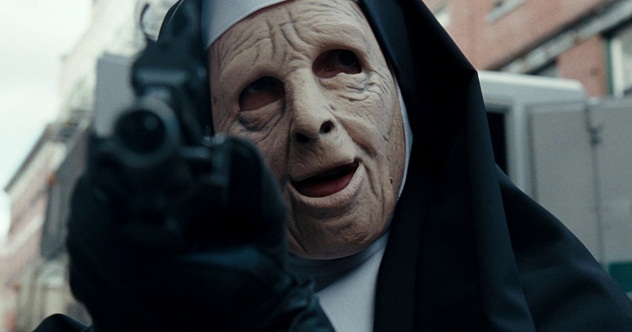

Most people finish a crime movie, discuss the ending, raid the refrigerator, and return to normal life. A tiny minority apparently watch the credits and think, “Interesting. I should make this everyone else’s problem.”
The history of cinema contains several disturbing cases in which offenders borrowed an idea, identity, method, costume, or fantasy from a movie. Some openly admitted the connection. In other cases, prosecutors, investigators, attorneys, or journalists identified striking similarities. However, inspiration is not the same as causation. A movie may supply imagery or a script, but it does not manufacture an offender’s personality, grievances, delusions, or willingness to hurt someone.
Researchers describe copycat crime as criminal behavior influenced by media or by a previously publicized offense. Studies suggest that such imitation exists, although its prevalence and causes are difficult to measure. The strongest cases usually contain direct evidence: repeated viewing, recorded statements, copied dialogue, matching disguises, written plans, or courtroom testimony.
With that important warning in place, here are 10 movies connected to real-life crimesand the uncomfortable stories behind those connections.
1. Taxi Driver and the Attempted Assassination of Ronald Reagan
The documented connection
Martin Scorsese’s Taxi Driver follows Travis Bickle, an isolated man who becomes obsessed with violence, a political assassination, and a young character played by Jodie Foster. John Hinckley Jr. reportedly watched the film repeatedly and developed an obsession with Foster that extended into stalking, letters, telephone calls, and fantasies of gaining her attention through a spectacular act.
On March 30, 1981, Hinckley shot President Ronald Reagan and three other people outside the Washington Hilton. Before the attack, he wrote to Foster that he hoped to impress her through a historic act. During his trial, the relationship between Hinckley’s thinking and Taxi Driver became so central that the jury watched the movie in court.
The case remains one of the clearest examples of a criminal identifying with a fictional character. Yet the film did not turn an ordinary viewer into an assassin. Hinckley’s severe psychological problems and obsessive behavior were already part of the dangerous equation.
2. A Clockwork Orange and Copycat Violence
A controversy larger than the screen
Stanley Kubrick’s A Clockwork Orange was designed as a disturbing examination of violence, punishment, and free will. Unfortunately, some viewers appeared more interested in Alex’s wardrobe and theatrical brutality than in the movie’s moral argument.
After its British release, newspapers linked several crimes to the film. Reported incidents included attacks committed by offenders dressed like Alex and an assault during which perpetrators echoed a song used in the movie. Kubrick later withdrew the film from British distribution, although debate continues over precisely how much the copycat allegations, protests, threats, and family concerns influenced that decision.
A more direct American example emerged in 1990, when a Pennsylvania teenager received a life sentence for killing a friend. He said repeated viewings of A Clockwork Orange had influenced the crime. That admission does not settle the wider argument about violent entertainment, but it makes the case more substantial than the usual tabloid game of “the suspect owned a movie, therefore the movie did it.”
3. Magnum Force and the Ogden Hi-Fi Murders
When a fictional detail became a deadly idea
The 1973 Clint Eastwood film Magnum Force contains a scene in which a victim is forced to swallow drain cleaner. In the film, the substance acts with the speed and neatness Hollywood often gives to terrible things. Real life, needless to say, does not employ a continuity editor.
During the 1974 robbery of the Hi-Fi Shop in Ogden, Utah, Dale Pierre and William Andrews took several people hostage. Evidence presented in the case indicated that the men had repeatedly watched Magnum Force while searching for a supposedly quiet way to eliminate witnesses. They forced their captives to drink drain cleaner, among other acts of violence. Three victims died, while two survived with devastating injuries.
Unlike cases built mainly on visual resemblance, this connection involved evidence of repeated viewing and an unusually specific method. It is also a brutal reminder that fictional violence often removes the prolonged suffering, confusion, and human consequences that make real violence so different from cinema.
4. Natural Born Killers and a Multistate Crime Spree
A satire interpreted as a fantasy
Oliver Stone’s Natural Born Killers is a feverish satire about Mickey and Mallory Knox, a murderous couple transformed into celebrities by sensational media. The movie attacks the public’s appetite for violence, but satire does not arrive with a built-in guarantee that every viewer will understand the joke.
In 1995, Sarah Edmondson and Benjamin Darras repeatedly watched the film before beginning a crime spree. Darras murdered a man in Mississippi. Edmondson later shot Louisiana convenience-store clerk Patsy Byers, leaving her paralyzed. The pair’s connection to the movie became the basis of a lawsuit against Stone and the film’s distributor.
The lawsuit survived several preliminary legal battles but was ultimately dismissed. The court found no evidence that the filmmakers intended to encourage criminal conduct, and First Amendment protections remained decisive. The ruling drew an important line: an offender may claim inspiration from a film without making the filmmaker legally responsible for the offender’s choices.
5. Money Train and the Subway Token-Booth Attack
A scene authorities could not ignore
In Money Train, a criminal sprays flammable liquid into a New York subway token booth and sets it on fire. Shortly after the movie’s 1995 release, subway clerk Harry Kaufman was attacked in a disturbingly similar manner at a Brooklyn station.
Two assailants pushed flammable liquid through the booth’s opening and ignited it. Kaufman suffered catastrophic burns and later died. New York officials publicly questioned whether the movie had influenced the attackers, and the incident intensified arguments over Hollywood violence.
The real attack was not an exact frame-by-frame reconstruction, and reports at the time emphasized that investigators had not immediately established a definitive causal connection. Nevertheless, the timing and uncommon method made the comparison difficult to dismiss. The episode also demonstrated how quickly public discussion can shift from a film’s entertainment value to whether one of its scenes offered a usable criminal script.
6. Scream and the Murder of Cassie Jo Stoddart
A horror obsession recorded on video
The strongest movie–crime connections usually come from the offenders themselves. The 2006 murder of 16-year-old Cassie Jo Stoddart in Idaho included precisely that kind of evidence.
Classmates Brian Draper and Torey Adamcik planned the killing, recorded videos before and after it, and discussed their desire to become notorious murderers. Their interests included the Scream franchise, whose original villains are horror-film fans who treat murder like a self-aware production.
Draper and Adamcik visited the house where Stoddart was staying, pretended to leave, returned in masks, frightened her by interfering with the home’s power, and killed her. Both were convicted of first-degree murder and conspiracy.
The videotapes helped distinguish this case from speculative accusations. The killers were not merely teenagers who happened to have seen a popular horror movie; they openly treated cinematic murder and real-world notoriety as part of the identity they wanted to create.
7. The Matrix and the “Matrix Defense”
When simulated reality entered the courtroom
The Matrix asks whether ordinary reality is an artificial simulation. For most viewers, this inspires philosophical conversations, black coats, and an ambitious attempt to lean backward at parties. In several criminal cases, however, defendants incorporated the movie’s premise into genuine delusions.
Joshua Cooke murdered his adoptive parents in Virginia in 2003. His attorneys considered presenting what journalists called a “Matrix defense,” arguing that he believed he was living inside a simulated world. Cooke eventually pleaded guilty rather than taking that strategy to trial.
Other defendants also claimed that victims were not truly real or that their actions occurred within a Matrix-like illusion. These cases are different from straightforward imitation. The offenders were not necessarily copying Neo’s actions; they were using the film’s reality-bending concept to organize or describe psychotic beliefs.
That distinction matters. A fictional idea can become attached to a serious delusion without being its medical causejust as earlier delusions borrowed imagery from religion, secret agencies, radio waves, or extraterrestrials.
8. Fight Club and the Starbucks Bombing
Project Mayhem leaves the DVD player
David Fincher’s Fight Club criticizes consumer culture, destructive masculinity, charismatic extremism, and the seductive appeal of belonging to a rebellious movement. Some fans somehow watched that warning and came away thinking Tyler Durden offered excellent career counseling.
In 2009, teenager Kyle Shaw was accused of planting an explosive device outside a Starbucks in Manhattan. No one was injured. Authorities said Shaw admired Fight Club, had formed his own underground fighting group, and wanted to imitate the movie’s Project Mayhem campaign.
Investigators reportedly found materials connected to homemade explosives, a copy of the film, and a news clipping about the attack. Shaw later pleaded guilty. The case illustrates the attraction of fictional antiheroes who make alienation feel stylish and rebellion feel organized. The movie depicts Tyler’s movement becoming authoritarian and disastrous, but viewers determined to idolize a character can be remarkably talented at ignoring the entire third act.
9. Point Break and the Hollywood Bandit
From movie disguises to a real bank-robbing career
In Kathryn Bigelow’s Point Break, a crew of surfers robs banks while wearing masks of former U.S. presidents. The criminals are athletic, theatrical, disciplined, and recklessthe sort of combination that looks exciting until federal agents become regular visitors to your week.
Scott Scurlock, later nicknamed the Hollywood Bandit, reportedly decided to pursue bank robbery after seeing the movie. He and his partners used elaborate disguises, makeup, masks, and carefully rehearsed methods during a series of robberies in the Seattle area.
Between 1992 and 1996, the group targeted at least 19 banks and stole approximately $2.3 million. The spree ended after a failed robbery and police pursuit in 1996.
Scurlock did not copy every detail of Point Break, but the movie apparently supplied both inspiration and an appealing criminal persona. That may be the most common form of cinematic influence: not a literal instruction manual, but a glamorous identity into which an offender can mentally cast himself.
10. Queen of the Damned and a Vampire Murder
A fictional character inside a delusional belief
The 2002 film Queen of the Damned features Akasha, an ancient vampire queen played by Aaliyah. Allan Menzies of Scotland claimed he watched the film more than 100 times and believed Akasha had visited him.
In December 2002, Menzies murdered his friend Thomas McKendrick. During the legal proceedings, he claimed that Akasha had promised him immortality if he carried out the killing. A jury rejected his attempt to reduce his responsibility, and he was convicted of murder.
As with the “Matrix defense,” the case involved more than a person simply copying a scene. Menzies folded a fictional character into a delusional system that he then used to explain his actions. His fascination with the movie was real and extreme, but reducing the crime to “a vampire film made him do it” would overlook his mental condition, personal responsibility, and the complex process through which fantasy became part of his claimed motive.
Do Violent Movies Really Cause Crime?
The examples above show that films can influence how certain offenders imagine, describe, or stage their crimes. They do not prove that movies routinely transform peaceful viewers into criminals. Millions of people have watched every title on this list without harming anyone. Some even remembered to return the disc to the correct case, demonstrating advanced moral development.
Copycat influence tends to operate as one factor among many. The offender may already possess violent intentions, psychological instability, a desire for fame, criminal experience, resentment, or a fascination with a particular victim. A movie then offers a recognizable character, dramatic method, costume, phrase, or fantasy.
Evidence is strongest when offenders explicitly discuss the film before the crime or preserve plans showing that connection. Evidence is weaker when observers notice only a surface resemblance. Criminals wear masks, rob banks, and imitate fictional gangsters for many reasons. Similarity alone is not proof.
There is also a risk in overemphasizing the movie. Sensational headlines may turn perpetrators into pop-culture figures, overshadow victims, and repeat the fame-driven reward that some offenders were seeking. Responsible coverage should describe documented influences without treating murderers as fascinating movie characters who wandered off the screen.
Experiences and Lessons From Examining Movie-Inspired Crimes
Look for evidence before accepting the headline
Researching stories about movies that inspired real-life crimes is an exercise in separating evidence from entertainment. The most dramatic version of a story is usually the easiest to repeat: an offender watched a violent movie and then copied it. The real version is almost always messier.
A useful first step is to ask who established the connection. Did the offender name the film? Did investigators recover recordings, written plans, costumes, or repeated references? Was the relationship presented under oath or documented in a court opinion? Alternatively, did a newspaper columnist merely notice that both the movie and crime involved a mask?
The difference is enormous. In the Cassie Jo Stoddart case, recorded planning provided direct insight into the killers’ fascination with horror movies and fame. In the Natural Born Killers litigation, repeated viewing and statements by the offenders supported a genuine connection, but the courts still rejected the idea that the filmmakers intended to incite violence. These are stronger and more complicated stories than a generic claim that “Hollywood caused another crime.”
Remember the people outside the movie comparison
Another important experience is recognizing how easily a clever cinematic angle can push victims into the background. A headline may focus on Scream, Taxi Driver, or Fight Club because famous titles attract clicks. The harm, however, was not fictional. Cassie Jo Stoddart was a teenager with a family and future. Harry Kaufman was a working subway employee. The hostages in the Hi-Fi Shop endured consequences that no two-hour thriller can adequately represent.
Responsible storytelling should therefore avoid treating the offender’s favorite movie as the most important fact. The movie is relevant because it helps explain planning, fantasy, or presentation. It should not become a marketing gimmick that grants the criminal a more dramatic identity.
Notice how offenders misread the films
Many movies on this list do not celebrate the behavior copied from them. Fight Club portrays its charismatic leader as manipulative and destructive. Natural Born Killers attacks media sensationalism. A Clockwork Orange asks whether forced moral conditioning destroys human freedom. Taxi Driver presents a deeply unstable protagonist, not a self-improvement coach with a mohawk.
Yet viewers can extract a fantasy while discarding the criticism surrounding it. An offender may identify with style rather than meaning: the costume, power, notoriety, secret group, dramatic speech, or feeling of becoming the main character. This is why asking what a movie “says” is different from asking what a particular person decided to take from it.
Avoid easy explanations
Blaming one film can feel reassuring because it places a frightening crime inside a simple story. Remove the movie, the logic suggests, and the crime disappears. Reality rarely cooperates. Personal history, access to victims or weapons, criminal opportunity, substance abuse, social isolation, delusions, grievance, and the pursuit of fame may all matter.
The best conclusion is neither “movies are harmless” nor “movies create criminals.” Stories influence people, including people with dangerous intentions. Sometimes they provide imagery, justification, or a blueprint. But responsibility remains with the offender, and prevention requires more than arguing about what was playing at the local theater.
Conclusion
The relationship between movies and real-life crime is unsettling precisely because fiction is powerful. It gives shape to fear, anger, identity, and fantasy. For most audiences, that power produces conversation, emotion, or entertainment. For a small number of offenders, it has become part of a criminal plan or delusional worldview.
The 10 cases examined here range from direct imitation to psychological identification. Some connections were documented through recordings and confessions; others were debated in court or interpreted by investigators. None supports the lazy argument that watching a violent movie automatically leads to violence.
Cinema can supply a mask, a phrase, an image, or a role. It cannot pull the trigger, enter the subway booth, plan the robbery, or choose the victim. That finaland most importantdecision belongs to the person who commits the crime.
SEO Metadata


