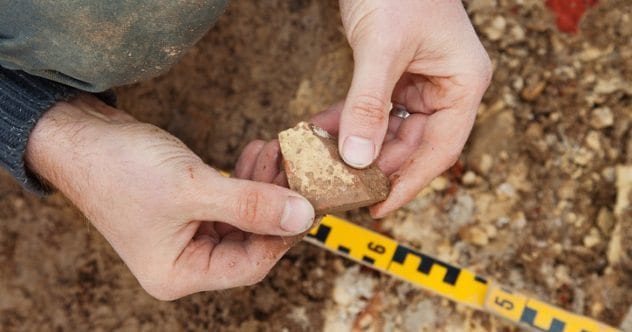

Ancient civilizations are usually introduced through their largest achievements: pyramids, temples, palaces, military victories, and statues of rulers who apparently never had a bad hair day. Yet the most revealing archaeological discoveries are often small enough to hold in one hand.
A worn sock, a grooming tool, or a joking gift can tell us more about everyday life than another ten-ton monument. These ancient personal items preserve evidence of friendship, childcare, fashion, hygiene, health care, travel, and the eternal human desire to look reasonably presentable before leaving the house.
The following rare ancient artifacts are valuable not merely because they survived. Each one preserves an intimate detail about the person who owned, wore, carried, or used it. Together, they show that people living thousands of years ago were not mysterious figures from another planet. They worried about their appearance, bought inexpensive souvenirs, cared for children, managed disabilities, and occasionally lost a sock.
Why Personal Artifacts Reveal So Much About Ancient Life
Official inscriptions often tell history from the viewpoint of kings, generals, priests, and governments. Personal belongings tell a different story. Wear marks can reveal how an object was handled. Repairs may show that it was valued. Decoration can hint at wealth, taste, occupation, religious beliefs, or identity.
These archaeological discoveries also correct popular assumptions. Ancient clothing was not always plain. Medical devices were not necessarily primitive. Roman humor could be wonderfully corny. Even ordinary household objects could combine practical engineering with elaborate symbolism.
1. A Roman Birthday Invitation Written on Wood
An ancient message that sounds surprisingly familiar
Among the Vindolanda writing tablets discovered near Hadrian’s Wall is a birthday invitation sent around A.D. 100 by Claudia Severa to her friend Sulpicia Lepidina. The message was written in ink on a thin wooden tablet. Most of the formal text may have been prepared by a professional scribe, but Claudia appears to have added a personal farewell in her own handwriting.
That handwritten closing makes the tablet extraordinary. It is among the earliest surviving examples of Latin writing attributed to a woman. More importantly, the invitation is warm rather than ceremonial. Claudia asks her friend to attend because her presence will make the celebration more enjoyable.
Remove the Roman names and military-frontier setting, and the message could belong in a modern group chat: Please come to my birthday. It will not be the same without you. The tablet reveals literacy, female friendship, family connections, travel between frontier settlements, and the apparently timeless anxiety that nobody will show up to the party.
2. A Cheap Roman Souvenir Stylus With a Joke
Proof that disappointing vacation gifts are ancient
An iron writing stylus discovered in London and dated to approximately A.D. 70 bears a playful inscription from someone returning from Rome. The longer Latin message jokes that the traveler wanted to bring a generous gift but had little money after such a long journey.
Its modern equivalent would be, “I went to Rome, and all I could afford was this pen.” Archaeologists found hundreds of styluses during excavations associated with Roman London, but this example was the only one carrying such an inscription.
The joke reveals a world of personal travel, affectionate gift-giving, writing, and modest budgets. Rome was already a destination whose name carried prestige, but not every visitor returned with marble sculpture or expensive jewelry. Some came back with inexpensive souvenirs and a carefully prepared excuse.
It is difficult to know whether the recipient laughed, sighed, or immediately asked whether the traveler had at least brought snacks. Either way, this tiny object preserves the personality of someone who lived nearly two millennia ago.
3. Leather “Bikini” Briefs From Roman London
Sportswear, underwear, or something in between
A pair of leather briefs found in a Roman well in London dates to roughly A.D. 43–100. The garment was tied at both hips with leather laces and was small enough that researchers have suggested it may have been worn by a young acrobat or dancer.
Images from the Roman world show female performers and athletes wearing similarly shaped garments. However, archaeologists have also considered whether the leather briefs functioned as ordinary underwear or as a sanitary garment. Since garments rarely survive in damp soil, every example adds valuable evidence to the history of clothing.
The item challenges the familiar image of Romans permanently wrapped in enormous white sheets. Their wardrobes included specialized clothing designed for movement, work, performance, and private life. It also reminds us that historians must be careful with modern labels. The word “bikini” is convenient, but the wearer would not have been preparing for a beach vacation with sunscreen and an overpriced frozen drink.
What survives is a rare glimpse of a person whose body needed comfort, coverage, and freedom of movementconcerns that remain completely recognizable today.
4. A Roman Ear Cleaner and Pair of Tweezers
The pocket grooming kit of antiquity
Excavations in southeastern England uncovered a Roman-era ear-cleaning implement and tweezers that look remarkably similar to tools still sold today. The ear cleaner resembles a metal cotton swab, although using that description may make modern doctors visibly nervous.
These tools demonstrate that personal grooming mattered across the Roman world. Tweezers could remove facial or body hair, while small probes and scoops were used for cleaning ears, fingernails, and other difficult areas. Similar implements sometimes appeared in portable sets carried on rings.
Roman literature and art frequently connect physical neatness with discipline, refinement, and social standing. An untidy appearance could be interpreted as evidence of a disorderly personality. In other words, the pressure to look polished did not begin with beauty influencers.
The tools also bring ancient bodies into the historical record. Their owners had stray hairs, earwax, rough nails, and all the other minor maintenance problems that heroic statues politely ignore.
5. An Egyptian Prosthetic Big Toe
A medical device designed for an actual individual
A carefully constructed prosthetic toe found on the foot of an Egyptian woman dates to approximately 950–710 B.C. Made from wood, leather, and textile components, the device was shaped to fit the wearer’s foot and could bend as she walked.
Researchers tested replicas with volunteers who were missing a big toe. Their experiments suggested that the devices could improve comfort while walking in traditional Egyptian-style sandals. Wear patterns and repeated adjustments further support the possibility that at least some ancient Egyptian artificial toes were used during life rather than attached only during mummification.
The object represents more than early medical technology. Someone examined a woman’s individual needs, selected appropriate materials, shaped multiple components, and refined the fit. That process required observation, craftsmanship, and empathy.
Modern prosthetics use advanced polymers, sensors, and computer modeling, but the central goal is unchanged: restore mobility while helping the device feel like part of the wearer. This ancient toe reveals a sophisticated response to disabilityand one very patient craftsperson who probably heard, “It still rubs a little on the left,” more than once.
6. An Elaborately Carved Egyptian Cosmetic Spoon
Beauty tools filled with religious meaning
A wooden cosmetic spoon dating to approximately 1600–1500 B.C. was carved as an outstretched hand holding a freshwater shell. A waterfowl appears at the other end, while the handle twists into an unusual spiral.
Objects of this type were once classified simply as containers for cosmetics or scented substances. More recent interpretations suggest that some may have carried symbolic meanings connected with fertility, renewal, water, nature, and religious ritual.
This is an important reminder that ancient personal items did not always fit into a single category. A cosmetic tool could be practical, decorative, spiritual, and socially meaningful at the same time. Applying oils or pigments might prepare someone for an ordinary day, a formal gathering, a religious ceremony, or burial.
The object also contradicts the idea that practical tools must be visually boring. Apparently, an ancient Egyptian owner could not settle for a plain spoon when a hand, shell, bird, and spiral would do the job with considerably more drama.
7. A Pair of Silver Roman Strigils
Ancient bath equipment with luxury styling
Strigils were curved scrapers used after the body had been rubbed with oil. Athletes and bathers pulled the tool across the skin to remove oil, sweat, dust, and grime. It was an effective cleaning system in a world without modern soap, though perhaps less relaxing than a fluffy towel.
A rare pair of Roman silver strigils from the mid-first century B.C. survives with its original carrying ring. Most known strigils were made from bronze, making this silver set unusually luxurious. The owner could transport both tools together, much like carrying a coordinated toiletry kit to a gym or bathhouse.
The pair reveals how hygiene, exercise, social life, and status overlapped in Roman culture. Public baths were places to clean the body, but they were also settings for conversation, networking, recreation, and being noticed.
Choosing silver rather than bronze transformed an ordinary grooming implement into a display of wealth. Even when scraping off yesterday’s sweat, some Romans evidently preferred to do it with accessories that matched.
8. A Tiny Greek Baby Feeder
Childcare preserved in terracotta
A small black-glazed terracotta vessel made in Athens around 350–325 B.C. has been identified as a baby feeder. Measuring only a few inches across, it has a narrow spout through which a child could drink milk or another liquid.
Such vessels reveal the physical labor of raising children in the ancient world. Parents, relatives, nurses, and enslaved caregivers all needed practical methods for feeding babies. The survival of these containers also shows that infants were supplied with objects designed for their small hands and mouths.
Archaeologists must interpret these items cautiously because some similarly shaped vessels may have served other purposes. Nevertheless, examples found in graves and domestic settings provide meaningful evidence about feeding practices and attitudes toward childhood.
Large historical narratives often treat children as future workers, citizens, or heirs. A baby feeder brings us back to the immediate reality: at some point, an exhausted adult had to persuade a hungry infant to drink without covering the entire room in milk. Civilization depended on many such victories.
9. A Colorful Egyptian Child’s Sock
Ancient fashion designed for socks and sandals
A child’s sock discarded in the Egyptian city of Antinooupolis during the third or fourth century A.D. was made with a split toe, allowing it to be worn comfortably with sandals. The small sock contained seven visible colors arranged in carefully planned stripes.
Scientific imaging showed that craftspeople produced those hues from only three plant-based dyes: madder for red, woad for blue, and weld for yellow. Different fibers and dyeing sequences created additional shades, including green, purple, and orange.
The sock therefore reveals advanced knowledge of color mixing, textile production, and design. It was not merely a scrap of cloth wrapped around a child’s foot. Someone selected the wool, prepared dyes, combined yarns, shaped the toe, and built a fashionable pattern into a very small garment.
Its missing partner is less scientifically informative but deeply relatable. Humanity may never learn whether the other sock was worn out, discarded elsewhere, or claimed by history’s first suspiciously powerful laundry monster.
10. An Etruscan Gold Dental Bridge
Dental engineering, appearance, and elite status
Beginning around the seventh century B.C., Etruscan craftspeople in ancient Italy produced dental appliances using thin gold bands. Surviving examples could secure replacement teeth taken from humans or animals, or stabilize existing teeth.
These devices represent some of the earliest clearly documented dental bridges. Their construction required an understanding of fit, pressure, metalworking, and the uncomfortable fact that mouths move constantly. Gold was useful because it was workable and resistant to corrosion, but it also advertised wealth.
Research suggests that known Etruscan gold-band appliances were closely associated with women and elite display. Some may have been more cosmetic than functional, making them part dental technology and part social statement.
These bridges reveal that appearance, oral health, and status were already entangled. The desire to replace a missing tooth did not wait for modern dentistry, anesthesia, or cheerful posters reminding patients to floss. Ancient people also wanted to smile, speak, eat, and be seen without an obvious gap announcing itself first.
What These Rare Ancient Artifacts Tell Us
These objects survived through unusual combinations of burial, dry climates, waterlogged soil, discarded rubbish, corrosion, conservation, and extraordinary luck. Yet their importance comes from the ordinary lives they preserve.
The birthday invitation reveals affection. The souvenir stylus preserves humor. The prosthetic toe records medical care. The baby feeder points to patient caregiving, while the sock and leather briefs show that clothing was specialized, colorful, and personal. Grooming tools, cosmetics, strigils, and dental work expose the continuing human concern with comfort, cleanliness, appearance, and social identity.
Monuments explain what societies wanted future generations to admire. Personal items reveal what individuals needed to get through an ordinary day. That smaller history is often more intimate, more complicated, and much harder to forget.
Experiencing Ancient Life Through Personal Objects
How small artifacts can change a museum visit
Encountering an ancient personal item can be more emotionally powerful than standing before a monumental statue. A statue announces authority from across the gallery. A child’s sock quietly asks you to come closer.
The first useful experience is to notice scale. Museum photographs often enlarge small finds until a two-inch baby feeder looks like a ceremonial cauldron. Seeing the real dimensions changes the story. A tiny sock immediately suggests the foot that once filled it. Slim leather ties imply fingers fastening them at the hip. A narrow stylus becomes an object carried, sharpened, dropped, and perhaps lent to a friend who never returned it.
Next, look for wear rather than perfection. A polished reproduction shows how an artifact may have looked when new, but scratches and repairs reveal its biography. Worn edges on a prosthetic toe suggest repeated movement. Corrosion on a grooming tool shows long contact with soil but may also preserve traces of manufacture. A mended container can demonstrate that replacing it was difficult or expensive.
Reconstruction offers another valuable experience. Trying a safe replica of a strigil, weaving a sample with a single needle, or writing on a wax tablet transforms abstract information into physical understanding. The action does not recreate ancient life perfectly; modern participants still have electric lighting, climate control, and the comforting knowledge that lunch is nearby. However, it reveals the skill required to use objects that appear simple behind glass.
It is also worth imagining the chain of people behind every possession. The owner of an Egyptian cosmetic spoon did not create the entire object alone. Someone sourced wood, carved its shape, polished the surface, selected imagery, transported it, and possibly filled it with a prepared substance. The object therefore connects personal experience with trade, labor, craftsmanship, belief, and social hierarchy.
Humor can make this connection stronger. The Roman souvenir stylus is memorable because its owner’s joke still works. The missing half of an ancient sock pair feels familiar because modern socks continue to disappear under circumstances that resist serious investigation. These moments of recognition do not trivialize archaeology. They prevent the past from becoming a lifeless catalog of dates.
At the same time, visitors should resist turning every artifact into a mirror of themselves. An ancient “bikini” was not necessarily swimwear. A cosmetic spoon may have served ritual purposes rather than an ordinary beauty routine. A dental bridge could communicate social rank in ways that differ greatly from modern dentistry. The most rewarding experience combines recognition with uncertainty: these people were human like us, but they lived within cultures that deserve to be understood on their own terms.
Finally, personal artifacts encourage us to reconsider what future archaeologists might learn from our belongings. Would a cracked phone reveal communication, entertainment, work, or anxiety? Would a reusable water bottle indicate environmental concern or simply an excellent marketing campaign? Would a drawer full of charging cables be interpreted as a ritual deposit?
Ancient people did not select most of these objects as messages for the future. They used them, repaired them, lost them, gave them away, or threw them into rubbish pits. That accidental honesty is precisely what makes rare ancient personal items so revealing. They preserve history before it had time to pose for the camera.


