
Some plants enter the garden like polite guests. Others arrive like they have already signed a 30-year lease, invited 9,000 relatives, and started eating the siding. Invasive plants are not simply “fast growers” or “a little enthusiastic.” They are species that spread aggressively beyond where they are planted, crowd out native vegetation, alter habitats, and create expensive headaches for homeowners, farmers, foresters, and conservation crews.
The tricky part is that many of the worst invasive plants in America are beautiful. They bloom, climb, shade, fragrance the air, feed a few pollinators, or turn fiery red in fall. That charm is exactly how many of them made their way into American yards in the first place. They were sold as ornamentals, erosion-control plants, privacy screens, wildlife shrubs, or “easy-care” landscaping solutions. Then they did what plants do best: survive, spread, and refuse to read the property line.
Below is a fresh, homeowner-friendly guide inspired by the well-known Bob Vila topic, expanded with practical insight, ecological context, and real-world examples. Before planting anything on this list, check your local invasive species regulations. Invasive status varies by state and region, but these 15 plants have earned their bad reputations the hard way.
What Makes a Plant Invasive?
An invasive plant is usually non-native to the ecosystem where it spreads and causes harm. That harm can include displacing native plants, reducing food and shelter for wildlife, changing soil chemistry, increasing fire risk, damaging structures, or making land management more expensive. In the garden, the warning signs are simple: seedlings appear everywhere, vines smother shrubs, roots resprout after cutting, and neighbors begin using phrases like “what have you done?”
Not every non-native plant is invasive, and not every aggressive plant is equally harmful. The problem species are the ones that escape cultivation and dominate natural areas, roadsides, wetlands, forests, pastures, and backyards. Once established, many require repeated cutting, digging, herbicide treatment, grazing, tarping, or professional removal. In other words: the cheapest time to control an invasive plant is before you buy it.
The 15 Worst Invasive Plants in America
1. Kudzu
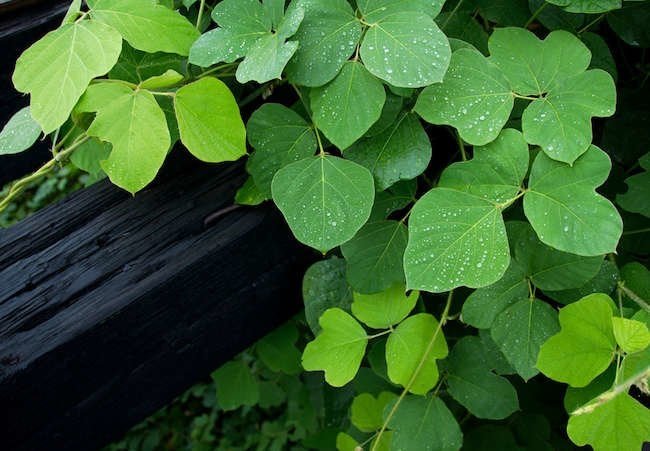
Kudzu is the celebrity villain of invasive plants, famous enough to have its own nickname: “the vine that ate the South.” Originally promoted for erosion control and forage, kudzu grows with astonishing speed in warm, humid climates. It climbs trees, blankets fences, covers abandoned buildings, and can smother native vegetation under a leafy green quilt.
The danger with kudzu is not subtle. It blocks sunlight, weakens trees, and creates massive mats of vegetation that are difficult to remove. Cutting it once is like giving it a haircut before a job interview; it will be back, looking refreshed. Effective control usually requires repeated treatment over multiple seasons, especially because the plant stores energy in large root crowns.
2. English Ivy
English ivy may look charming on old brick walls, but in American forests and yards it often behaves like a botanical burglar. It creeps along the ground, climbs tree trunks, and forms dense evergreen mats that suppress native wildflowers and young tree seedlings. When ivy climbs high into tree canopies, it adds weight and wind resistance, making trees more vulnerable to storm damage.
Homeowners often plant English ivy as a low-maintenance ground cover. The problem is that “low maintenance” can quietly become “lifetime custody battle.” It roots as it spreads, hides pests, and can damage masonry when allowed to cling to vulnerable surfaces. Native ground covers such as wild ginger, foamflower, green-and-gold, or Pennsylvania sedge are often better ecological choices, depending on the region.
3. Wisteria
Chinese and Japanese wisteria are breathtaking in bloom, with cascading purple flowers that look like they were designed by a romantic poet with a trellis budget. Unfortunately, these vines are also powerful, woody, and wildly persistent. They can climb trees, strangle trunks, pull down weak structures, and form dense thickets that shade out native plants.
The key distinction is species. American wisteria is native to parts of the United States and is generally less aggressive than its Asian relatives. If you want those dreamy hanging flowers without inviting a vine with world-domination energy, look for native wisteria and confirm the scientific name before buying.
4. Japanese Barberry
Japanese barberry became popular because it is tough, colorful, deer-resistant, and easy to shape. That résumé sounds impressive until you learn the plant can invade forests and form thorny thickets that crowd out native understory plants. Birds spread the seeds, and the shrub thrives in disturbed areas and woodland edges.
Japanese barberry has another unpleasant talent: it can create humid, sheltered microhabitats that are favorable for ticks. That does not mean every barberry shrub is a tick hotel with valet parking, but it does give homeowners another reason to reconsider planting it. Native alternatives may include inkberry holly, winterberry, Virginia sweetspire, or native viburnums, depending on your site conditions.
5. Butterfly Bush
Butterfly bush is a classic example of good intentions wearing the wrong shoes. It attracts adult butterflies with nectar, which makes it seem like a pollinator hero. But in some regions, especially where it spreads from gardens into disturbed sites and natural areas, it can displace native plants that support the full butterfly life cycle.
Adult butterflies need nectar, but caterpillars need host plants. A garden full of butterfly bush can become a snack bar with no nursery. Better pollinator support comes from native milkweeds, asters, goldenrods, coneflowers, blazing star, bee balm, and regionally appropriate shrubs. If butterfly bush is invasive in your area, skip it and plant species that feed both the adults and the babies.
6. Purple Loosestrife
Purple loosestrife is gorgeous in wetlands, which is exactly the problem. Its tall spikes of purple flowers can transform marshes, pond edges, and wet meadows into dense stands that push aside native wetland plants. That reduces habitat quality for birds, amphibians, insects, and aquatic life that depend on diverse native vegetation.
This plant produces huge numbers of seeds and spreads readily in moist environments. Once it dominates a wetland, removal becomes complicated and expensive. For rain gardens and wet areas, consider native alternatives such as swamp milkweed, blue flag iris, cardinal flower, Joe-Pye weed, pickerelweed, or native sedges.
7. Norway Maple
Norway maple was widely planted as a hardy shade tree, especially in cities and suburbs. It tolerates compacted soil, pollution, and tough conditions. Unfortunately, it also produces many seedlings and casts dense shade that makes it difficult for native plants to grow beneath it.
In woodlands, Norway maple seedlings can compete with native maples, oaks, and understory plants. In yards, its shallow roots can battle lawns and garden beds like a cranky underground octopus. Homeowners looking for shade trees should consider native species such as sugar maple, red maple, swamp white oak, serviceberry, or tulip tree where appropriate.
8. Japanese Honeysuckle
Japanese honeysuckle smells wonderful, grows quickly, and seems innocent until it starts smothering everything within reach. This vine climbs shrubs and trees, blankets the ground, and competes aggressively for light, water, and nutrients. It has been used historically for erosion control, but in many places it escaped that job and promoted itself to ecosystem manager.
The vine spreads by seeds and vegetative growth, which means birds, wildlife, and careless yard waste disposal can help it travel. Native coral honeysuckle is a much better choice for gardeners who want flowers, hummingbirds, and fewer regrets.
9. Black Locust
Black locust is native to parts of the United States, but outside its natural range it can become invasive. This is a useful reminder that “native to America” does not always mean “appropriate everywhere in America.” Black locust spreads by root suckers, forms colonies, and can alter soil nitrogen levels, giving it an advantage in some habitats.
It also has brittle branches and can create maintenance problems near homes, roads, and utility areas. In disturbed sites, prairies, savannas, and open habitats, black locust may crowd out species that need sun and leaner soil. Regional context matters, so check local guidance before planting or removing it.
10. Oriental Bittersweet
Oriental bittersweet is a woody vine with attractive berries that are often used in fall decorations. Unfortunately, those cheerful berries are part of its invasion strategy. Birds spread the seeds, while the vines climb and coil around trees and shrubs. Over time, bittersweet can girdle trunks, pull down branches, and smother vegetation.
It is especially concerning because it can be confused with American bittersweet, a native species. The invasive Oriental bittersweet generally has flowers and fruits along the leaf axils, while American bittersweet tends to fruit at the ends of stems. When in doubt, ask a local extension office or invasive plant specialist before planting, cutting, or decorating with it.
11. Japanese Knotweed
Japanese knotweed is one of the most difficult invasive plants to control. It grows in dense stands, spreads through rhizomes, and can regenerate from tiny root or stem fragments. It often appears along streams, roadsides, drainage areas, and disturbed soils, where it crowds out native plants and can contribute to erosion problems when winter dieback leaves bare banks exposed.
Homeowners should not mow, dig, or dump knotweed casually. Moving contaminated soil or plant pieces can spread the infestation. This is one of those plants where “I’ll just yank it out” can turn into “I have accidentally started a knotweed franchise.” Professional advice is often worth it, especially for large patches.
12. Common Buckthorn
Common buckthorn was introduced as a hedge plant, but it has become a serious problem in many northern and midwestern landscapes. It leafs out early, holds leaves late, produces abundant berries, and forms dense thickets that suppress native shrubs and wildflowers.
Buckthorn can also affect soil conditions and wildlife habitat. Birds eat the fruit, but the berries are not high-quality nutrition compared with many native shrubs. Worse, birds spread the seeds far and wide, turning one hedge into a neighborhood issue. Native replacements include serviceberry, chokeberry, spicebush, elderberry, and native dogwoods.
13. Dame’s Rocket
Dame’s rocket is often mistaken for native phlox because it has pretty pink, purple, or white flowers. Look closely: dame’s rocket typically has four petals, while phlox has five. That small difference matters because dame’s rocket escapes gardens and spreads into roadsides, woodland edges, and natural areas.
Part of the mustard family, dame’s rocket can produce lots of seed and establish dense patches. It is sometimes included in wildflower mixes, which sounds charming until the “wildflower meadow” becomes an invasive plant starter kit. Choose native phlox, wild bergamot, penstemon, or other regionally appropriate bloomers instead.
14. Burning Bush
Burning bush is beloved for its blazing red fall color. It is also increasingly disliked for its ability to spread by bird-dispersed seeds into forests and natural areas. Once established, it can form dense shrub layers that interfere with native plant regeneration.
The landscaping industry loved burning bush because it was reliable, tidy, and dramatic in autumn. But a plant can be beautiful and still be a bad neighbor. Native alternatives for fall color include oakleaf hydrangea, chokeberry, highbush blueberry, Virginia sweetspire, serviceberry, and sumac species suitable to your region.
15. Giant Hogweed
Giant hogweed deserves special attention because it is not merely invasive; it is dangerous to people. Its sap can cause severe skin reactions when exposed to sunlight, including painful burns, blistering, scarring, and potential eye injury. This is not a plant to wrestle with in shorts while holding a pair of bargain pruners.
If you suspect giant hogweed on your property, do not touch it. Contact local authorities, a state agriculture department, or an extension office for identification and removal guidance. It resembles some native and non-native relatives, so proper identification is essential. The plant’s size, large flower umbels, and purple-blotched stems can be clues, but safety comes first.
Why Homeowners Should Care
Invasive plants are not just a park ranger problem or a “somewhere in the woods” problem. They begin in ordinary places: a backyard hedge, a discount nursery pot, a roadside ditch, a bird-dropped seed under the fence. Once they spread, homeowners may face higher maintenance costs, reduced plant diversity, weakened trees, damaged hardscaping, clogged views, and tense conversations with neighbors who suddenly own half your vine.
They also affect the larger ecosystem. Native insects often rely on native plants. Birds rely on those insects to feed their young. When invasive plants replace diverse native vegetation, the whole food web can become thinner and less resilient. A yard may still look green, but ecologically, it can be as useful as a plastic salad.
How to Control Invasive Plants Without Making Things Worse
Identify Before You Attack
Correct identification is the first step. Some invasive plants resemble native species, and some native plants behave aggressively without being ecologically harmful. Use local extension resources, state invasive plant lists, native plant societies, or qualified landscapers to confirm what you have.
Remove at the Right Time
Timing matters. Pulling seedlings after rain is easier. Cutting vines before seed production helps reduce spread. Treating woody stems during the right season can improve results. For many species, one weekend of effort is not enough; control may take several years of monitoring and follow-up.
Do Not Compost Problem Plants Casually
Seeds, berries, roots, and rhizomes can survive casual composting. Japanese knotweed fragments, bittersweet berries, and other plant parts may spread if tossed into brush piles or dumped near woods. Bag and dispose of invasive plant material according to local rules.
Replant Quickly
Nature dislikes empty space. After removing invasives, replant with appropriate native or non-invasive species. Otherwise, the same invaderor a new onemay move right back in. Think of removal and replanting as one project, not two.
Better Native and Non-Invasive Alternatives
Replacing invasive plants does not mean giving up beauty. In many cases, native alternatives offer flowers, fall color, wildlife value, erosion control, and lower long-term maintenance. For vines, consider coral honeysuckle, crossvine, native clematis, or American wisteria where suitable. For shrubs, explore spicebush, viburnum, serviceberry, chokeberry, winterberry, inkberry, elderberry, or Virginia sweetspire. For ground covers, look at wild ginger, creeping phlox, foamflower, green-and-gold, sedges, or woodland strawberries.
The best choice depends on your region, soil, light, moisture, deer pressure, and available space. A plant that behaves beautifully in Arizona may be a menace in Maryland. A shrub that supports birds in one region may be inappropriate in another. Local guidance is your friend; the plant tag is only the opening argument.
Experience Notes: What Invasive Plants Teach You the Hard Way
Anyone who has dealt with invasive plants for more than five minutes learns a humbling truth: the plant usually has more patience than the person. You cut it. It resprouts. You dig it. A root piece laughs quietly underground. You miss one berry-covered stem, and next spring the birds have planted a free sample pack across the fence line. Invasive plant control is less like cleaning a room and more like training for a marathon where the finish line keeps sending runners back.
One common homeowner experience starts with a “pretty little vine.” Maybe it was English ivy softening a bare slope, Japanese honeysuckle perfuming a fence, or wisteria turning a pergola into a magazine photo. For a year or two, everything looks wonderful. Then the vine reaches the shrubs. Then the shrubs disappear. Then the vine finds the maple tree, the garage corner, the neighbor’s chain-link fence, and possibly your will to live. At that point, the original plant receipt is long gone, but the consequences remain very much in bloom.
Shrubs can be just as sneaky. Japanese barberry and burning bush often look neat in foundation plantings. They sit there politely, accepting haircuts and pretending to be responsible citizens. Meanwhile, birds carry seeds into nearby woods, where the shrubs establish under trees and begin crowding out native seedlings. Homeowners may not connect the tidy front-yard plant with the messy woodland invasion down the street, but ecosystems absolutely connect the dots.
The biggest lesson is that removal is only half the job. If you clear invasive plants and leave bare soil, you have not finished the project; you have created a vacancy. Sunlight hits the ground, weed seeds wake up, and opportunistic plants arrive like they saw a “For Rent” sign. Successful restoration means filling the space with desirable plants as soon as practical. Mulch helps, but living roots help more. Native grasses, sedges, shrubs, perennials, and trees can rebuild competition and make it harder for invaders to return.
Another lesson is emotional: do not feel guilty if you planted one of these species years ago. Many were promoted by nurseries, garden writers, highway departments, and even conservation programs before their long-term impacts were fully understood. Gardening knowledge evolves. The responsible move is not shame; it is action. Remove what you can, stop planting known invaders, share better alternatives, and monitor the area after removal.
Finally, invasive plant work teaches respect. Respect for local ecology. Respect for plant identification. Respect for the fact that “easy to grow” can mean “hard to stop.” The best gardens are not just pretty in the first season; they behave well over time. A truly beautiful landscape supports pollinators, birds, soil life, and neighbors without sending vines over the property line like green extension cords. Choose plants with the future in mind, and your yard will reward you with beauty that does not require combat gear.
Conclusion
The 15 worst invasive plants in America are a reminder that beauty and good behavior are not the same thing. Kudzu, English ivy, wisteria, Japanese barberry, butterfly bush, purple loosestrife, Norway maple, Japanese honeysuckle, black locust, Oriental bittersweet, Japanese knotweed, common buckthorn, dame’s rocket, burning bush, and giant hogweed all show how quickly a desirable landscape plant can become an ecological problem.
For homeowners, the solution is practical rather than dramatic: identify plants before buying, check state invasive lists, remove known problem species carefully, dispose of plant material responsibly, and replant with regionally appropriate alternatives. A healthy yard does not need to be wild, messy, or complicated. It simply needs plants that know how to share.
Note: Always confirm invasive status and disposal rules with your local extension office, state agriculture department, or regional invasive plant council before planting or removing regulated species.


