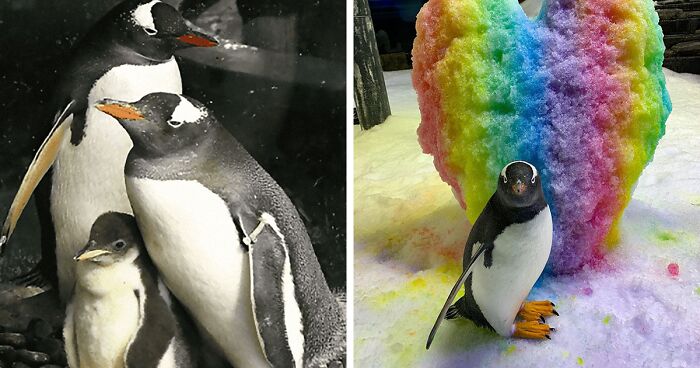

Two devoted gentoo penguins, a pebble-built nest, and an egg that needed better odds: the story of Sphen and Magic shows why foster parenting in penguin colonies is more than a feel-good headline.
Penguins have a remarkable talent for looking formal while living lives that are gloriously dramatic. They wear tuxedos, argue over rocks, shout across crowded colonies, and occasionally become international celebrities simply by being exceptionally good parents.
That is exactly what happened with Sphen and Magic, a bonded male gentoo penguin pair at Sea Life Sydney Aquarium. The pair became famous after keepers noticed their careful nesting behavior and gave them a dummy egg to incubate. They treated that practice egg with such impressive devotion that the aquarium later trusted them with a real foster egg. Their first chick, Lara, hatched in 2018. A few years later, the pair successfully fostered and raised another chick after receiving a second egg that needed attentive parents.
The story traveled quickly because it had everything the internet enjoys: adorable birds, unconventional family structure, heartfelt caregiving, and enough pebbles to make a tiny penguin home-improvement show. But behind the viral photographs is a more meaningful story about animal behavior, foster care, conservation, and why a healthy nest can matter enormously when a chick’s survival is on the line.
Who Were Sphen and Magic?
Sphen and Magic were gentoo penguins, a species known for its white head stripe, bright orange-red bill, and impressive commitment to carrying stones around as though each pebble were a diamond engagement ring. Gentoo penguins build nests from pebbles and generally share incubation and chick-rearing duties between partners.
During breeding season, keepers observed Sphen and Magic building a nest together, displaying bonding behavior, and taking turns caring for an egg-shaped object. Rather than dismissing the pair as a curiosity, the animal care team evaluated their behavior the same way they would evaluate any potential foster parents: Were they nesting properly? Did they settle calmly on the egg? Did they alternate incubation duty? Did they protect the nest?
The answer was a very enthusiastic yes.
After the pair proved themselves with a dummy egg, Sea Life Sydney gave them a real egg from another pair. They successfully incubated it and raised their first foster chick, initially nicknamed “Sphengic,” a combination of their names. The chick later became known as Lara. Their success demonstrated that parental care is about behavior, attention, timing, and cooperationnot about whether a pair looks like a traditional human family photograph.
The Second Foster Egg: Why It Mattered
The phrase “neglected egg” sounds like a tiny penguin courtroom drama, but the reality is more practical. In managed penguin colonies, keepers may transfer eggs when another pair has more eggs than it can safely care for, when a nest is not being managed well, or when a proven foster pair has a better chance of providing stable incubation.
In 2020, Sphen and Magic were again selected to foster an egg. Their first parenting success had already shown keepers that they could take turns incubating, maintain a nest, and care for a chick after hatching. The second foster chick was named Clancy, adding another chapter to the pair’s remarkable family story.
Calling this “adoption” is a human-friendly shortcut, but the biological work was very real. The egg needed warmth, protection, regular rotation, and consistent nesting behavior. Once the chick hatched, it needed frequent feeding, brooding, and protection as it grew. For a penguin chick, the difference between an attentive nest and an unstable one is not sentimental. It can be the difference between thriving and never making it to its awkward teenage-feather phase.
Gentoo penguin eggs generally incubate for roughly 34 to 36 days, and both adults typically take part in caring for the chick after hatching. That shared workload is exactly why Sphen and Magic’s teamwork mattered so much. They were not simply sitting near an egg for a cute photo opportunity. They were doing the exhausting, repetitive, high-stakes work of penguin parenting.
Why Same-Sex Penguin Pairings Are Not a Scientific Surprise
News stories often describe pairs such as Sphen and Magic as “gay penguins.” The phrase is understandable and widely used because it quickly tells readers that two male penguins formed a bonded pair and raised chicks together. Still, animal behavior should not be squeezed too tightly into human labels.
Scientists can observe courtship behavior, bonding, nesting, sexual behavior, pair stability, and shared parenting. They cannot ask a penguin to fill out a relationship questionnaire, preferably while holding a clipboard with tiny flippers. What researchers and animal care professionals can say is that same-sex pairings and same-sex parenting behavior have been documented in many bird species, including penguins.
Same-sex pairings may involve social bonding, cooperation, access to nesting opportunities, parental instincts, limited partner availability, or a combination of factors. In a colony setting, these behaviors are part of the complicated social world birds build around breeding, territory, food, and survival.
That does not make Sphen and Magic less interesting. It makes them more interesting. Their story is not valuable because penguins are secretly miniature humans in formalwear. It is valuable because it shows that nature is varied, flexible, and often far less concerned with our rigid categories than we are. Audubon has noted that same-sex pairings and chick-rearing have been observed among birds, including penguins, while zoological teams continue to evaluate parenting success through actual care behaviors.
How Penguin Foster Parenting Works
Step One: Keepers Watch the Nest
Good foster candidates are not chosen because they pose well for visitors. Animal care teams watch for practical signs of readiness: a stable pair bond, proper nest building, calm incubation, egg handling, shared duties, and responsive behavior toward the partner.
For Sphen and Magic, the dummy egg was an important test. It allowed keepers to observe how the pair behaved before placing a viable egg in their nest. The couple showed the kind of steady attention that can be especially valuable in a colony where one egg may need more reliable care.
Step Two: Protect the Egg
An incubating penguin has an important job: maintain warmth, shield the egg from disturbance, and stay committed long enough for the embryo to develop. In the wild, weather, predators, food availability, nest competition, and accidental damage can all reduce a chick’s chances.
At accredited zoos and aquariums, animal care teams may intervene when it supports welfare, breeding success, or the long-term management of a species. Foster placement is one tool among many. Other situations may require veterinary care, temporary removal of an egg, or hand-rearing by trained staff when parental care is not possible.
Step Three: Raise the Chick
Hatching is only the beginning. Penguin chicks depend on their parents for warmth, food, protection, and social learning. Adults feed chicks regurgitated food and recognize their offspring by calls and other cues. A healthy chick eventually grows, molts out of its fluffy juvenile appearance, and becomes increasingly independent.
In other North American zoo breeding programs, experienced penguin pairs are also sometimes selected to foster eggs from newer or less successful parents. That approach helps reduce risk while keeping care as natural as possible.
What the Story Teaches About Conservation
It would be easy to treat the Sphen and Magic story as a cute internet detour between videos of cats failing to land on furniture. But penguin stories can also direct attention toward conservation.
Penguins depend on healthy marine ecosystems. Many species rely on krill, fish, and squid, and changes in sea ice, ocean temperature, food availability, pollution, and fisheries can affect their breeding success. Antarctic food webs are especially sensitive because krill are a critical food source for many seabirds, seals, and whales.
Not every penguin species faces the same threats, and gentoo penguins are not identical to emperor, Adélie, African, or Humboldt penguins. Still, the broad conservation picture is serious: many penguin populations are under pressure, and researchers continue to monitor how changing ocean conditions affect food supply and nesting success.
That is why a foster chick in a managed colony can have value beyond one delightful family photo. Accredited institutions use breeding programs, veterinary care, education, research, and carefully managed populations to support conservation knowledge. The point is not to turn penguins into mascots. The point is to help people care about the ecosystems that penguins cannot protect with flippers alone.
Why People Connected With the Gay Penguin Couple Story
Stories about Sphen and Magic resonated because they were unexpectedly familiar. Two parents built a home, took turns handling responsibilities, protected an egg, fed a hungry youngster, and probably discovered that silence becomes a luxury once the baby starts demanding snacks.
For LGBTQ+ readers, the pair became symbols of inclusion and family diversity. For animal lovers, they were proof that patient observation can reveal remarkable behavior. For zookeepers, they represented a successful foster pair whose skills helped a chick survive. For everyone else, they were a persuasive argument that perhaps we should all take nest-building more seriously.
The deeper appeal comes from care. People recognize care when they see it, whether it happens in a family kitchen, a hospital nursery, a bird colony, or a pebble nest in an aquarium habitat. Sphen and Magic’s story did not need exaggerated drama. Their actions were enough.
Related Experiences: What Foster Care Looks Like in Penguin Colonies
Watching a penguin colony during breeding season changes the way people think about birds. At first, visitors often see a crowd of similar-looking tuxedoed animals waddling around with important expressions. After a few minutes, however, the colony becomes a neighborhood. One bird guards a nest with the seriousness of a homeowner protecting a newly installed lawn. Another rearranges pebbles as if launching a luxury renovation project. A pair calls to each other across the habitat, sounding like two neighbors trying to locate each other at a very noisy barbecue.
Animal care teams experience the colony differently. They do not see anonymous penguins. They learn individual personalities, nesting habits, food preferences, partner dynamics, and the subtle signs that tell them whether a bird is ready to incubate an egg or needs closer attention. That experience is what made it possible for keepers to identify Sphen and Magic as strong foster candidates rather than simply a popular pair.
One of the most meaningful experiences in penguin care is watching two adults share responsibility. Penguin parenting is rarely a one-bird job. One parent may settle onto the nest while the other feeds or rests. Then the roles switch. The changeover can look casual to a visitor, but it represents coordination that protects the egg and later supports the chick. In gentoo penguins, both parents contribute to incubation and early chick care, which makes cooperative behavior especially important.
Another striking experience is seeing how quickly a chick changes. A newly hatched penguin chick is small, vulnerable, and completely dependent on the adults around it. It needs warmth, food, and protection. Over time, it grows a thick layer of down, becomes more active, and begins the long, awkward transition toward waterproof feathers and independent swimming. Like many teenagers, it may look as though it borrowed its outfit from several different birds at once.
Foster parenting offers a powerful lesson because it shows that animal care is not always straightforward. Some eggs need experienced parents. Some chicks need professional hand-rearing. Some nests need more monitoring than others. Animal care teams make decisions based on welfare, behavior, veterinary guidance, and the needs of the broader population. The goal is not to create a headline. The goal is to give every viable chick the best possible chance.
For visitors, the experience can be unexpectedly moving. A person may arrive expecting a quick photo of penguins and leave thinking about cooperation, family, conservation, and the value of careful caregiving. That is part of the power of stories like Sphen and Magic’s. The birds did not set out to make a social statement. They built a nest, cared for an egg, and raised chicks. Humans supplied the headlines. The penguins supplied the evidence.
There is also a useful reminder for anyone tempted to dismiss animal stories as “just cute.” Cute can be an entry point, not the destination. A lovable penguin pair can lead people to learn about endangered species, warming oceans, habitat protection, ethical animal care, and the detailed work of zoological professionals. The smile comes first. The curiosity comes next. Ideally, the concern for wildlife sticks around long after the penguin photos disappear from the feed.
Conclusion: A Nest Built on Care
Sphen and Magic became famous because they were a same-sex penguin couple that successfully raised foster chicks. But their lasting significance is bigger than a viral headline. They showed that attentive care, cooperation, and a stable partnership can give an egg a stronger chance to hatch and a chick a better chance to thrive.
The second foster egg was not merely a charming sequel. It was a vote of confidence from experienced keepers who had watched the pair prove their parenting skills. In a penguin colony, that kind of trust is earned one carefully guarded egg, one shared shift, and one extremely well-placed pebble at a time.
SEO Tags


