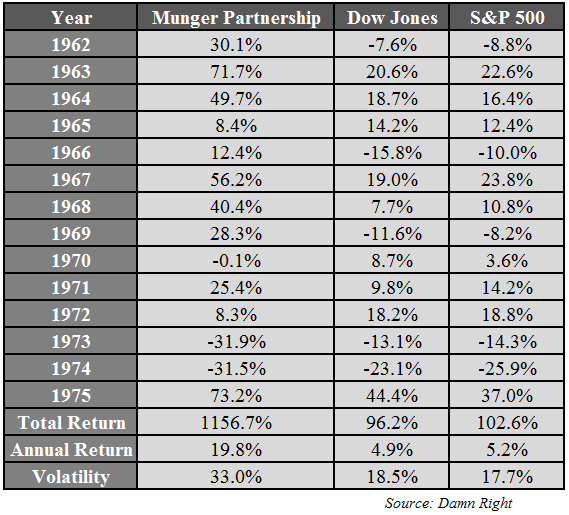

Charlie Munger never treated investing as a contest to see who could build the fanciest spreadsheet or use the most syllables before lunch. His approach was more practical: understand a few important ideas, think clearly, avoid catastrophic mistakes, and allow time to do the heavy lifting.
As Warren Buffett’s longtime partner and Berkshire Hathaway’s vice chairman, Munger helped transform Berkshire from a struggling textile operation into a collection of high-quality businesses. Buffett later described Munger as the “architect” of modern Berkshirea fitting title for the man who persuaded him to stop hunting exclusively for dirt-cheap companies and start paying reasonable prices for exceptional ones.
The following Charlie Munger investing principles are not a magic formula. They are better than that: a durable framework for evaluating businesses, controlling emotions, allocating capital, and avoiding the financial equivalent of juggling chainsaws while wearing roller skates.
Why Charlie Munger’s Investing Philosophy Still Matters
Munger viewed investing as a branch of rational decision-making rather than a separate activity performed only when the stock market was open. Accounting mattered, but so did psychology, economics, mathematics, history, engineering, biology, and the study of incentives.
That multidisciplinary approach distinguished him from investors who focused only on valuation ratios. In his 1994 speech on elementary worldly wisdom, Munger argued that isolated facts are not especially useful unless they are connected through a “latticework” of mental models. In plain English, investors need several ways to examine a problem because one favorite theory can turn every business into the same imaginary nail.
1. Buy Wonderful Businesses at Fair Prices
One of Munger’s greatest contributions to Berkshire was his preference for outstanding businesses over statistically cheap but mediocre companies. Buffett had been trained by Benjamin Graham to search for deeply discounted stocks, including troubled businesses that might offer one final profitable opportunity.
Munger encouraged a different standard: buy a wonderful business at a fair price rather than a fair business at a wonderful price. A weak company may appear inexpensive, but recurring operational problems, poor economics, and constant capital requirements can consume the original discount. The bargain sometimes comes with a free headache subscription.
The See’s Candies lesson
See’s Candies became part of Berkshire Hathaway in 1972. Its appeal was not merely that people enjoyed chocolate. The company had customer loyalty, pricing power, a trusted brand, and modest capital requirements. Those qualities allowed cash generated by the business to be invested elsewhere rather than continually poured back into factories and inventory.
For modern investors, the principle is to examine the quality of the underlying economics. Look for durable demand, attractive returns on capital, manageable debt, recurring cash flow, and a competitive advantage that cannot be erased by a rival with a large advertising budget and an enthusiastic social media intern.
2. Stay Within Your Circle of Competence
Munger did not believe investors needed to understand every industry. They needed to understand the boundaries of what they actually knew. The size of a person’s circle of competence matters less than the accuracy of its border.
A business belongs inside your circle when you can explain how it makes money, why customers choose it, what could weaken its advantage, how much capital it requires, and which variables determine long-term results. Reading three enthusiastic posts about semiconductor demand does not automatically make someone a semiconductor analyst.
Munger and Buffett maintained a mental “too hard” pile for opportunities they could not evaluate confidently. Passing on an incomprehensible investment was not considered failure. It was risk control. Knowing what you do not know can be more valuable than producing a heroic forecast based on six assumptions and a cheerful imagination.
3. Build a Latticework of Mental Models
Munger’s mental models are practical concepts borrowed from different disciplines. Supply and demand, compound interest, opportunity cost, economies of scale, regression to the mean, probability, competitive destruction, social proof, and incentive-caused bias are examples.
No single model explains an entire company. A retailer may benefit from scale, suffer from changing consumer habits, rely on supplier relationships, and tempt management with poorly designed bonusesall at once. Good analysis combines several models instead of forcing the facts into one convenient story.
How mental models improve investment analysis
Imagine a fast-growing subscription business. A growth model highlights recurring revenue. A psychological model asks whether customers remain because they love the service or because canceling is intentionally annoying. An economic model examines customer-acquisition costs. A competitive model considers whether rivals can copy the product. An incentive model checks whether executives are rewarded for real cash generation or merely for expanding reported sales.
The broader analysis may reveal a wonderful company, a fragile company, or a very expensive company wearing a wonderful-company costume.
4. Invert the Problem
Munger frequently used inversion: instead of asking only how an investment could succeed, ask how it could fail. Then work backward and avoid the conditions most likely to produce disaster.
Before buying a stock, an investor might ask:
- What could permanently impair this company’s earning power?
- What amount of debt would make a normal recession dangerous?
- Which technological change could make the product irrelevant?
- What evidence would prove my investment thesis wrong?
- Am I attracted to the company because of facts or because its stock recently went up?
Inversion will not identify every winner, but it can eliminate many obvious losers. Munger’s underlying insight was that consistently avoiding stupidity is often easier and more dependable than attempting to be brilliant on command.
5. Understand Incentives and Human Psychology
Munger considered incentives among the most powerful forces in business. People frequently behave according to how they are rewarded, even while sincerely explaining that their behavior serves a nobler purpose.
If executives receive bonuses for revenue growth, they may pursue unprofitable sales. If a fund manager fears looking different from competitors, the portfolio may quietly become an expensive copy of the market. If an analyst is paid by a company involved in a transaction, sudden enthusiasm should not be surprising.
In his work on the psychology of human misjudgment, Munger examined tendencies such as social proof, envy, overconfidence, commitment bias, authority influence, and reward-driven behavior. He also warned that several biases can combine, producing what he called a “lollapalooza” effectan especially powerful wave of irrational behavior.
This matters during speculative booms. Rising prices create social proof, envy creates fear of missing out, past gains create overconfidence, and financial promoters provide persuasive reasons to keep buying. By the time the story reaches maximum excitement, skepticism may feel socially unacceptablewhich is usually when skepticism deserves a comfortable chair and a large cup of coffee.
6. Demand a Margin of Safety
Even an excellent business can become a poor investment if the purchase price assumes perfection. A margin of safety is the gap between the price paid and a conservative estimate of value.
Valuation is never exact. Future revenue, margins, competition, interest rates, and capital requirements cannot be known with scientific precision. The margin of safety protects investors from errors in judgment, unexpected events, and the universe’s occasional enthusiasm for ruining tidy forecasts.
A practical approach is to estimate value under multiple scenarios rather than relying on a single target price. Use conservative assumptions, examine downside cases, and avoid investments that require everything to go right. Great businesses deserve respect, but they do not deserve unlimited prices.
7. Practice Patience and Let Compounding Work
Munger believed that large investment gains often came from waiting rather than constant buying and selling. Compounding needs time, which means investors must resist the urge to interrupt a successful process merely because the market has produced a new shiny object.
A company that can reinvest earnings at attractive rates may increase its intrinsic value for years. Selling too early can create taxes, transaction costs, and the difficult task of finding an equally attractive replacement. Activity may feel productive, but a blinking brokerage screen is not a fitness tracker. More movement does not necessarily mean better results.
Munger’s emphasis on saving, disciplined spending, and long-term compounding also applied before stock selection. Building the first meaningful pool of capital is often slow; after that, compounding can contribute an increasing share of wealth creation.
8. Use Opportunity Cost as a Decision Tool
Every investment competes with the best available alternative. Munger did not evaluate an opportunity only by asking whether it looked acceptable. He compared it with other possible uses of capital.
If an investor already owns a business with strong economics, trustworthy management, and a reasonable valuation, a new idea should offer a compelling advantage before receiving capital. Otherwise, adding another position may create complexity without improving expected returns.
Opportunity cost also encourages selectivity. Investors do not need to swing at every pitch. They can wait for situations they understand and act decisively when the combination of quality, price, and probability becomes unusually favorable.
9. Concentrate Carefully, but Never Risk Ruin
Munger was skeptical of mindless diversification. When an investor has deeply researched a small number of exceptional businesses, spreading capital across dozens of weaker ideas can reduce both knowledge and potential returns.
However, concentration should not be confused with recklessness. Position size must reflect uncertainty, financial obligations, liquidity needs, and the possibility of being wrong. Borrowed money can turn an ordinary decline into a permanent loss because lenders are famously uninterested in hearing that your thesis remains attractive over the next decade.
Munger also believed common-stock investors should be emotionally prepared for severe market declines. Temporary price volatility is not automatically the same as permanent business damage, but investors need sufficient liquidity and temperament to avoid forced selling during a crisis.
10. Evaluate Management, Culture, and Integrity
Financial statements describe what has happened. Management quality influences what happens next. Munger favored capable, trustworthy operators who thought like owners and allocated capital rationally.
Investors should study executive compensation, acquisition history, share issuance, debt decisions, accounting adjustments, and communication with shareholders. Does management discuss mistakes plainly, or does every failure arrive wrapped in fourteen slides about “strategic momentum”?
Berkshire’s owner-oriented principles encouraged shareholders to think like long-term business partners rather than traders holding pieces of paper. The company emphasized per-share intrinsic progress, aligned ownership, and long-duration relationships with shareholders.
11. Keep Learning and Update Your Beliefs
Munger treated lifelong learning as a responsibility. His reading crossed disciplines, and he believed useful knowledge should accumulate over time. An investor who stops learning may continue using an old map while the competitive landscape builds an entirely new highway.
Learning does not mean chasing every new trend. It means improving judgment, studying mistakes, strengthening mental models, and changing conclusions when evidence changes. Reports about Munger’s final years describe him continuing to study companies, industries, technology, and unfamiliar investment opportunities late in life. His curiosity did not retire simply because he had already achieved a respectable résumé.
The 2007 USC commencement address reflected the same philosophy: wisdom acquisition, reliability, ethical conduct, and consistent effort were presented as practical habits rather than decorative virtues.
A Charlie Munger-Inspired Investment Checklist
Before purchasing an individual stock, investors can translate Munger’s principles into a written checklist:
- Understand the business: Explain its economics in plain English.
- Identify the moat: Determine why customers stay and whether competitors can copy the advantage.
- Examine financial strength: Review debt, cash flow, margins, capital intensity, and returns on capital.
- Study incentives: Understand how executives, employees, salespeople, and intermediaries are rewarded.
- Assess management: Look for honesty, operating ability, and rational capital allocation.
- Invert: Write down the most plausible ways the investment could fail.
- Estimate value conservatively: Use several scenarios and require a margin of safety.
- Compare alternatives: Measure the opportunity against your best existing idea or a diversified fund.
- Control position size: Never allow one mistake to threaten your financial survival.
- Prepare to wait: Decide in advance which developments justify holding, buying more, or selling.
Practical Experience: Applying Charlie Munger’s Principles
The following is a composite educational example designed to illustrate how an investor might apply Munger’s framework.
Consider an investor reviewing two companies. The first is a fashionable technology business growing revenue by 45% annually. Its stock has tripled, financial commentators adore it, and social media has already selected the color of its future private jet. The second is a less exciting payment-processing company growing at 9%, producing consistent free cash flow, and retaining customers through deeply integrated software.
The exciting company initially appears irresistible. Then the investor applies Munger’s circle-of-competence test. He cannot clearly explain the company’s technology, customer switching behavior, or long-term competitive advantage. Most of his confidence comes from the rising stock price and enthusiastic commentary. That is not business understanding; it is borrowed conviction.
Next, he uses inversion. What could cause the investment to fail? The company depends heavily on two major customers, pays employees generously with newly issued shares, and requires continued access to inexpensive capital. Competitors are entering the market, while the valuation assumes years of rapid growth. Several things do not need to go wrong. One or two would be sufficient.
He then examines psychology. Social proof is everywhere because respected investors own the stock. Envy appears when friends report large gains. Commitment bias emerges because he has already spent weeks researching the company and does not want that effort to feel wasted. Recognizing these pressures does not prove the company is bad, but it prevents emotion from dressing itself as analysis.
The payment processor receives the same examination. Its business model is easier to understand. Customers face meaningful switching costs because the software is connected to billing, reporting, and compliance systems. Revenue is diversified, debt is manageable, and management owns a meaningful number of shares. The company is not immune to competition, but its advantages are visible and measurable.
Valuation remains important. The investor calculates conservative, moderate, and optimistic scenarios. At the current price, the moderate case offers a satisfactory return, while the conservative case suggests limited permanent downside. He purchases a modest position rather than behaving as though one spreadsheet has granted him access to the future.
Six months later, the stock falls 25% after management lowers its short-term revenue forecast. The initial reaction is discomfort, accompanied by the universal investor tradition of checking the price far more often than is medically useful. Instead of selling automatically, he revisits the original thesis.
Customer retention remains strong, debt has not increased, cash flow is positive, and the competitive position appears intact. The decline reflects slower near-term growth rather than permanent deterioration. Because he maintained emergency savings and avoided leverage, he is not forced to sell. He adds slightly to the position while keeping the total allocation within a predetermined limit.
Two years later, the company’s growth improves, but the more important result is behavioral. The investor has developed a repeatable process. He now writes down assumptions before buying, separates business performance from stock-price movement, and records the reasons that would justify selling. Some investments still disappointMunger’s principles do not cancel uncertaintybut errors become easier to diagnose.
The deepest lesson from this experience is not that the quieter company always wins. Sometimes the exciting business becomes a spectacular investment. The lesson is that a decision should rest on understanding, probabilities, valuation, incentives, and downside protectionnot on popularity. Munger’s framework does not promise constant brilliance. It aims for something more realistic: fewer unforced errors, better emotional control, and enough financial durability to let good decisions compound.
Conclusion
Charlie Munger’s investing principles combine business analysis with psychology, patience, humility, and common sense. He taught investors to favor durable companies, remain inside their circle of competence, use multiple mental models, examine incentives, invert difficult problems, and protect themselves from permanent loss.
The approach can feel almost too simple in a financial world overflowing with forecasts, alerts, indicators, and people shouting from studio screens. Yet simplicity is not the same as ease. Waiting is difficult. Independent thinking is uncomfortable. Admitting ignorance is rarely fashionable. Refusing a popular investment can make a person feel foolishat least until the popular investment begins behaving foolishly.
Munger’s lasting message is that investment success does not require predicting every market movement. It requires building a sound process, controlling avoidable risks, continuing to learn, and remaining rational when other people temporarily misplace that particular skill.


