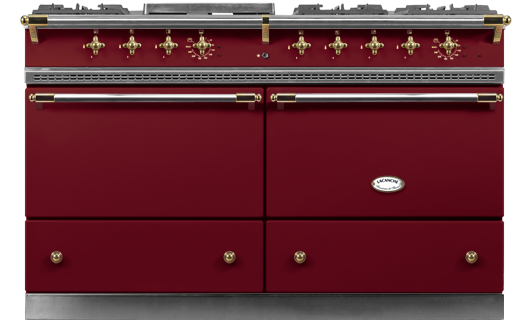

The Lacanche Sully cooking range is what happens when a serious culinary appliance develops impeccable French taste. Handcrafted in Burgundy, generously proportioned, and customizable down to its burners, ovens, enamel color, and metal trim, the Sully is designed for homeowners who want their range to work hard and look spectacular doing it.
It is not a discreet stainless-steel box that quietly disappears between cabinets. At more than 55 inches wide, the Sully walks into the kitchen, straightens its brass knobs, and announces that dinner will be taken seriously from now on.
What Is the Lacanche Sully Cooking Range?
The standard Lacanche Sully is a 55 5/16-inch-wide French range built around two large ovens and a spacious, configurable cooktop. Depending on the selected layout, the cooking surface can accommodate as many as seven gas burners, including a powerful central burner, or combine conventional burners with a cast-iron French top, electric plancha, or other specialized components.
For cooks who require even more capacity, Lacanche also offers the Sully 1800. That model measures approximately 71 1/16 inches wide and adds a vertical warming cupboard beside the two main ovens. It may be configured with as many as nine burners or eight burners paired with a cast-iron simmer plate.
As of July 2026, the standard Sully starts at approximately $22,300 in the United States. The Sully 1800 starts at about $29,175. Premium enamel colors, upgraded metal finishes, cooktop modules, shipping, ventilation, and installation increase the final project cost. In other words, the starting price is the opening act, not the encore.
Current model dimensions, configurations, and starting prices are based on Lacanche USA product information.
Why the Sully Is More Than a Pretty Range
Lacanche appliances frequently appear in professionally designed kitchens because they function as architectural centerpieces. Designers have placed them beneath plaster hoods, inside expanded fireplace openings, and against dramatic stone or handmade-tile backsplashes. The scale, enamel body, and traditional hardware make the range feel closer to fitted furniture than a conventional appliance.
That visual appeal is not merely decorative theater. The Sully has the cooking capacity to support large family meals, holiday roasting, bread baking, sauce preparation, and multi-pan entertaining. Its appeal comes from the combination of professional-style simplicity and residential customization. It provides powerful heat and substantial construction without surrounding the cook with touchscreens, subscription services, or a control panel that behaves like it needs a software update.
The luxury-kitchen market increasingly treats the range as the room’s focal point rather than an appliance that should disappear. Lacanche fits that trend particularly well because its color, trim, and cooking configuration can be coordinated with cabinetry, hardware, stone, and the owner’s cooking habits.
Design publications consistently feature Lacanche ranges as statement appliances and kitchen anchors.
Cooktop Configurations: Classique or Traditional?
The Classique Cooktop
The Classique configuration places an open grate over the central 18,000-BTU burner. This setup suits cooks who frequently sear steaks, use a wok, rapidly reduce sauces, or bring stockpots to a boil. A portable simmer plate is normally included, allowing gentler heat to be spread beneath one or more pans when needed.
The advantage of the Classique top is direct access to the strongest flame. It behaves more like a familiar gas cooktop, only with enough output to make a timid burner reconsider its career choices.
The Traditional French Top
The Traditional configuration covers the central burner with a heavy cast-iron plate. Heat is strongest near the center and gradually decreases toward the edges. Cooks can move pots around the surface to boil, simmer, hold, or gently warm food without repeatedly adjusting burner knobs.
A removable center plug permits direct access to the burner for wok cooking. The French top is particularly useful for sauces, braises, stocks, and recipes requiring several temperature zones. However, it takes time to heat and remains hot after cooking. Someone who mainly wants speed and direct flame may prefer the Classique layout.
Choosing the Right Burner Outputs
High-output burners are impressive, but more power is not automatically more useful. Owner discussions often praise the 11,000-BTU burners for everyday cooking because they provide greater flexibility with cast iron, enameled cookware, and moderate-temperature recipes. The 15,000- and 18,000-BTU burners shine during searing and boiling but may feel aggressive when a recipe calls for a barely perceptible simmer.
The smartest configuration is based on what you cook most often. A stir-fry enthusiast may adore the central open burner. A sauce obsessive may prefer the French top. A household that regularly cooks rice, beans, custards, and delicate soups may benefit from including lower-output burners or an induction module.
Cooktop specifications and owner configuration observations are supported by Lacanche USA and detailed owner discussions.
Two Large Ovens With Genuine Dual-Fuel Flexibility
One of the Sully’s strongest features is its pair of large ovens. Buyers may order both as gas ovens, both as electric ovens, or choose one gas and one electric. Large electric ovens include a switch that allows the cook to alternate between static electric heat and fan-assisted convection.
Gas Oven Performance
A gas oven produces moist, vigorous heat, making it especially attractive for roasting poultry, meats, bread, and dishes that benefit from retained moisture. The heat is initially more concentrated near the base before circulating naturally through the cavity.
Electric and Convection Performance
The electric oven creates a drier cooking environment and is generally better suited to pastries, cookies, pizza, broiling, and foods that need crisp surfaces. Convection circulates hot air for quicker cooking and stronger browning, although rotating baked goods may still produce more even results.
Many buyers choose one gas oven and one electric-convection oven because the combination expands the range’s capabilities. A turkey can roast in moist gas heat while pies bake in the electric oven. This arrangement is also useful when preparing several courses that require different temperatures and cooking environments.
Oven Size and Cookware Fit
Current large Sully-style gas ovens measure approximately 21 1/4 inches wide, 11 1/2 inches high, and 17 inches deep internally. The electric-convection cavity is slightly shallower because the rear fan occupies part of the space. A large oven can generally accommodate a half-sheet pan and, depending on its height, a 20- to 25-pound turkey.
The cavities are wide but not unusually tall. Before ordering, measure favorite Dutch ovens, roasting pans, baking stones, and grandma’s heroic turkey roaster with the enormous handles. Sentimental cookware is surprisingly unforgiving.
Oven types, dimensions, heat characteristics, and cookware guidance come from Lacanche USA’s current oven documentation.
Colors, Trim, and Custom Details
The Sully can be finished in 29 porcelain-enamel colors, ranging from restrained neutrals to deep blues, greens, reds, and yellows. Matte black is typically the standard finish, while other colors are treated as upgrades. Buyers can pair the enamel body with brass, chrome, nickel, or brushed stainless-steel trim.
The enamel is created by fusing a glass-like coating to metal at high temperature. The resulting surface is nonporous, resistant to stains and heat, and relatively easy to wipe clean. It also gives the range its distinctive depth of color, which painted steel rarely matches.
Unlacquered brass deserves special consideration. It develops a natural patina and requires occasional polishing if the owner prefers a bright finish. Patina lovers call this character. Perfectionists call it Saturday afternoon.
Because screen colors can differ substantially from real enamel samples, buyers should inspect physical samples before finalizing the order. A shade that appears soft gray on a laptop may reveal blue, green, or warm undertones in the actual kitchen light.
Current finish, enamel, and trim information is based on the Lacanche USA color program.
Installation and Ventilation Requirements
A Lacanche Sully should be planned early in a renovation. Do not finish the cabinets, flooring, gas line, electrical service, and hood and then casually ask where the giant French range should go. The installer’s manual contains specific utility locations, clearances, depth requirements, and adjustable-height information that should be incorporated into the construction drawings.
The range requires qualified installation that complies with local gas, electrical, ventilation, and building codes. Configurations containing electric ovens or other electrical heating components may require a suitable 240-volt, four-wire supply. Gas pressure, burner adjustment, grounding, and final commissioning should be handled by licensed professionals.
Ventilation is equally important. Lacanche USA currently recommends an overhead canopy approximately 59 inches wide and 24 to 27 inches deep for the standard Sully. Suggested blower capacity ranges from roughly 900 to 1,300 CFM with a 10-inch round duct or equivalent. The required performance depends on cooking style; frequent wok cooking and high-heat searing create more grease-laden vapor than simmering a quiet pot of coq au vin.
The range is also heavy, wide, and expensive. Delivery access should be measured from the street to the final location, including gates, steps, elevators, doors, hallways, and turning points. discovering that the appliance cannot clear a doorway is a very sophisticated way to ruin a Tuesday.
Installation dimensions and utility-placement guidance come from the official U.S. installer’s manual and support documentation.
Cleaning, Maintenance, and Service
The Sully does not include a self-cleaning oven cycle. Its oven interiors must be cleaned manually using methods and products approved by the manufacturer. Warming the cavity slightly before wiping it with mild soap and a soft sponge can help loosen residue.
Burner grates, caps, stainless surfaces, enamel panels, and metal trim require different care. Heavy grates should be lifted completely rather than dragged across nearby stainless steel. Spills are easier to remove before they transform into archaeological material.
The range’s relatively straightforward analog design may be appealing to buyers who prefer mechanical controls over complex electronics. In the United States, Art Culinaire currently provides a three-year warranty against qualifying manufacturing defects and maintains a nationwide network of more than 300 preferred service providers. Coverage and service authorization requirements should be reviewed before purchase.
Cleaning instructions, warranty length, and U.S. service-network details are based on current Lacanche USA support information.
How Much Does a Lacanche Sully Really Cost?
The published starting price covers the range in its standard form, but a realistic budget must account for the complete kitchen project. Potential additional expenses include premium enamel, upgraded trim, specialized cooktop modules, freight, delivery equipment, professional installation, gas or electrical work, custom cabinetry, a high-capacity hood, exterior ducting, makeup air, and structural modifications.
Made-to-order production currently takes approximately five to six months according to the U.S. distributor, although the full schedule can be longer when design decisions, shipping, customs processing, construction delays, and installer availability are included.
For that reason, the Sully is best treated as a major renovation decision rather than a last-minute appliance purchase. Confirm the configuration before cabinets are fabricated, and make sure the contractor, kitchen designer, ventilation specialist, plumber, and electrician are all working from the same current technical documents.
Current production timing and made-to-order information are provided by Art Culinaire, Lacanche’s U.S. distributor.
Who Should Buy the Lacanche Sully?
The Sully is a strong choice for enthusiastic home cooks who regularly use several burners, roast large cuts, bake frequently, entertain, and value durable analog controls. It is also suited to homeowners who see the range as a permanent design feature rather than an appliance they expect to replace whenever a new connectivity standard arrives.
It may be excessive for a household that rarely cooks, dislikes manual oven cleaning, needs highly automated controls, or has limited ventilation and renovation flexibility. Its cost is difficult to justify on performance alone because excellent meals can be prepared on far less expensive equipment.
What the Sully offers is a particular combination of capacity, customization, traditional craftsmanship, visual presence, and tactile simplicity. Buyers are paying for a cooking platform and a centerpiecepart appliance, part furniture, and part extremely convincing reason to renovate the entire kitchen around it.
Real-World Experiences With the Lacanche Sully Cooking Range
Long-term owner experiences suggest that living with a Lacanche Sully involves a genuine learning curve, especially for cooks moving from a conventional American range. The burners deliver substantial heat, and even the smaller ones may feel powerful with thin stainless-steel pans. Owners frequently recommend starting at lower settings than expected, using heavy cookware, and relying on the included simmer plate for delicate sauces, rice, beans, and long braises.
The central burner receives mixed but understandable reactions. Owners who sear, stir-fry, or boil large quantities tend to appreciate its speed. Others report using it less frequently because the heat is more than they need for ordinary weeknight cooking. Some buyers later conclude that the Traditional French plate would have suited their habits better, while French-top owners occasionally wish they had chosen the immediate response of an open flame. This is why configuration should follow actual cooking patterns rather than showroom enthusiasm.
The dual-oven arrangement is one of the most consistently praised features. Owners can roast meat in the gas oven while using dry electric heat for cookies, pastry, or crisp vegetables. The lack of oven-door windows initially worries some buyers, but several report adapting quickly by using timers and checking food near the end of the estimated cooking period. The oven interiors are not cavernous, yet the wide Sully cavities handle substantial roasters and practical baking sheets more comfortably than Lacanche’s smaller oven formats.
Preheating and temperature behavior require attention. Owners commonly learn the personality of each oven by using an independent thermometer, recording results, and adjusting familiar recipes. Convection can accelerate browning, so some cooks use the fan only near the end of baking rather than throughout the entire cycle. This is less “press button and forget” and more “develop a relationship with your appliance.” Fortunately, the relationship usually involves pie.
Cleaning experiences depend heavily on expectations. The enamel surfaces wipe down well, but the range does not clean itself. Grease beneath grates, marks on stainless steel, tarnishing brass, and oven splatter must be addressed manually. Some owners enjoy the evolving patina and treat maintenance as normal care for a crafted object. Others miss the convenience of sealed burners and self-cleaning ovens.
Owners also emphasize the importance of powerful ventilation. When several burners or ovens are operating, the Sully produces significant heat, steam, and cooking vapor. A correctly sized hood makes the experience far more comfortable and prevents the kitchen from becoming an artisanal sauna.
The most enthusiastic owners describe the Sully as a solid, satisfying workhorse that feels special every day. They appreciate the heavy controls, simple operation, strong burners, flexible ovens, and the way the range visually anchors the room. Less enthusiastic comments usually involve cost, long lead times, manual cleaning, heat management, or a configuration chosen for appearance rather than cooking needs.
The practical lesson is straightforward: the Lacanche Sully rewards deliberate buyers. Visit a showroom or owner-ambassador kitchen when possible. Handle the doors and controls, examine the oven cavities, bring measurements of favorite cookware, and discuss the dishes prepared most often. The best Sully is not necessarily the one with the largest burner count or fanciest cooktop. It is the one configured so naturally around the owner’s habits that, after the novelty fades, cooking on it still feels effortless.
This experience section synthesizes long-term owner reviews and community discussions rather than claiming a personal hands-on test.
Final Verdict
The Lacanche Sully cooking range is not the most practical choice for every household, nor is it trying to be. It is a large, expensive, highly customizable French range intended for people who cook often, care deeply about kitchen design, and prefer lasting mechanical craftsmanship to disposable technology.
Configured thoughtfully, it can handle everything from quiet weekday breakfasts to ambitious holiday dinners. Configured poorly, it can become a magnificent collection of burners and features that looked irresistible in the showroom but rarely get used.
Choose the oven fuels, burner outputs, cooktop style, ventilation, and finish according to real life rather than fantasy life. Do that, and the Sully can become exactly what its admirers expect: the hardworking, beautiful heart of the kitchenwith just enough French drama to make scrambled eggs feel like an occasion.
Note: Prices, production schedules, available finishes, warranty terms, and installation specifications may change. Confirm the final quotation and current technical requirements with Lacanche USA and qualified local professionals before ordering or modifying the kitchen.


