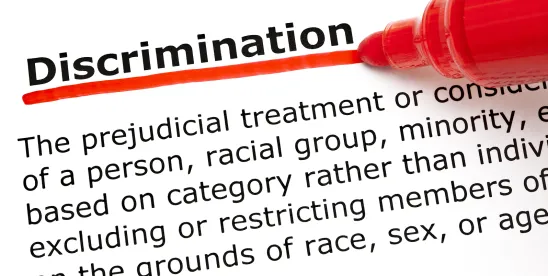

The Supreme Court has a way of taking a phrase that sounds harmless in a conference roomsomething like “lateral transfer”and turning it into a legal thunderclap. That is exactly what happened in Muldrow v. City of St. Louis, a major Title VII employment discrimination decision that changed how courts evaluate workplace transfer claims.
For years, many employees challenging discriminatory job transfers had to clear a high hurdle. It was not enough to show that an employer treated them differently because of sex, race, religion, national origin, or another protected trait. In many courts, they also had to prove the change caused a “significant,” “material,” or “substantial” employment disadvantage. In plain English: “Yes, discrimination may have happened, but was it bad enough?”
The Supreme Court’s answer in Muldrow was refreshingly direct: Title VII does not demand that kind of extra “significance” test. An employee must show some workplace harm connected to a term, condition, or privilege of employment, but the harm does not have to be dramatic enough to make the office printer stop jamming in sympathy.
What the Supreme Court Decided in Muldrow
The case involved Jatonya Muldrow, a police sergeant in St. Louis who claimed she was transferred out of a specialized intelligence role because of her sex. She kept the same rank and pay, which became central to the lower courts’ reasoning. Because she did not lose salary, benefits, or title, the lower courts concluded that she had not suffered the type of major job disadvantage needed to move forward under Title VII.
The Supreme Court disagreed. Writing for the Court, Justice Elena Kagan explained that Title VII prohibits discrimination with respect to the terms, conditions, or privileges of employment. The statute does not say the employee must prove a major injury, a career earthquake, or a pay-stub disaster. Instead, the worker must show that the discriminatory action left them worse off in some identifiable employment-related way.
That distinction matters. The ruling does not mean every workplace annoyance becomes a federal lawsuit. Nobody gets a Title VII claim because the office coffee is weak enough to qualify as beige water. But when an employer changes a worker’s job because of a protected characteristic and the change causes some real harm to the worker’s employment situation, the claim may now survive where it previously might have been dismissed.
Why This Title VII Decision Matters
Title VII of the Civil Rights Act of 1964 is one of the country’s most important workplace anti-discrimination laws. It prohibits employers from discriminating against employees because of race, color, religion, sex, or national origin. Over time, courts have had to decide what counts as discrimination “with respect to” employment terms and conditions.
Before Muldrow, many courts focused heavily on whether the employee experienced a tangible economic loss. A demotion, firing, pay cut, or denial of promotion was usually enough. But other actionssuch as a transfer to less desirable duties, a less prestigious assignment, a worse schedule, or loss of workplace perkswere often harder to challenge unless the employee could show a serious disadvantage.
The Supreme Court lowered that bar. The new standard is not “no harm required,” but it is also not “bring us a smoking crater where your career used to be.” The employee must show some injury related to employment terms or conditions. That may include changes to job duties, schedule, prestige, responsibilities, opportunities, workplace flexibility, or other meaningful aspects of the job.
What “Some Harm” Means in Real Workplace Terms
The phrase “some harm” may sound small, but in employment law, small phrases can carry a forklift’s worth of consequences. The Court made clear that the harm must still be tied to the workplace. A purely subjective preference may not be enough. However, the employee no longer has to prove that the harm was significant, material, or economically devastating.
Examples of Possible Workplace Harm
Consider an employee who is transferred from a high-profile client-facing role to a back-office position with fewer advancement opportunities. If the transfer happened because of sex or race, the employee may now have a stronger Title VII claim even if their paycheck stayed the same.
Or imagine a worker moved from a daytime schedule to a less desirable night shift because of a protected characteristic. Under the old approach in some courts, the employer might argue there was no pay cut, so there was no actionable harm. After Muldrow, courts are more likely to ask whether the schedule change made the employee worse off with respect to working conditions.
Another example: an employee loses access to specialized assignments, leadership duties, training opportunities, or professional visibility. These changes may not appear immediately in wages, but careers are not built on wages alone. They are built on experience, reputation, relationships, and the chance to be seen doing important work.
What the Decision Does Not Do
It is equally important to understand what Muldrow does not say. The Supreme Court did not eliminate the harm requirement entirely. Employees still need to show that the challenged action caused some employment-related injury. The case also does not automatically make every transfer unlawful. Employers may still transfer workers for legitimate business reasons, including staffing needs, performance concerns, restructuring, training rotations, or operational changes.
The legal problem arises when the transfer or employment decision is made because of a protected characteristic. In other words, Title VII is not a general workplace fairness code. It does not guarantee perfect managers, inspiring assignments, or coworkers who refill the copier paper like civilized adults. It targets discrimination.
Employers also still have defenses. They can present legitimate, nondiscriminatory reasons for a transfer. Employees must still prove causation. Evidence still matters. Documentation still matters. Credibility still matters. The courthouse door may be easier to open, but the employee still has to walk through it with facts.
Why Employers Should Pay Attention
For employers, the practical message is simple: review transfer decisions with more care. A transfer that once looked legally low-risk because it did not affect pay or title may now deserve closer analysis. Human resources teams, managers, and in-house counsel should examine not only compensation changes but also changes in duties, hours, career path, workplace status, benefits, flexibility, and opportunities.
Documentation becomes especially important. If a transfer is based on business needs, employers should be able to explain those needs clearly and consistently. A vague “we just thought it was best” may sound casual in a meeting, but in litigation it can age like unrefrigerated tuna salad.
Employers should also train supervisors to avoid assumptions tied to protected characteristics. For example, moving a mother away from travel-heavy work because a manager assumes she wants more family time can create legal risk, even if the manager believes the decision is helpful. Likewise, assigning physically demanding or high-visibility work based on gender stereotypes can become evidence of discrimination.
Why Employees Should Understand the New Standard
For employees, the decision is empowering but not magical. Workers who believe they were transferred or reassigned for discriminatory reasons should focus on facts. What changed? Why did it change? Who made the decision? What was said? How were similarly situated coworkers treated? Did the change affect schedule, duties, opportunities, prestige, safety, flexibility, or professional growth?
Employees should keep records of relevant communications, job descriptions, schedule changes, performance history, and internal complaints. A discrimination claim is not built on a feeling alone, even when that feeling is absolutely doing jumping jacks in your stomach. It is built on evidence showing both discriminatory motive and workplace harm.
How Muldrow May Affect Future Title VII Claims
The long-term impact of Muldrow will depend on how lower courts apply the “some harm” standard. Some claims that previously failed at the summary judgment stage may now survive long enough for fuller factual review. That does not mean every employee wins. It means courts may be less likely to dismiss claims simply because the employee kept the same paycheck or job title.
The ruling may also affect how attorneys plead discrimination cases. Complaints will likely pay closer attention to specific workplace harms: lost responsibilities, reduced prestige, worse schedules, decreased access to training, diminished authority, or less favorable working conditions. Instead of relying only on economic loss, employees may describe how the challenged action changed the reality of the job.
Employers, meanwhile, may update policies around transfers, reassignments, shift changes, and role restructuring. The safest approach is not to freeze all personnel decisions like a corporate popsicle. It is to make decisions based on legitimate criteria, apply those criteria consistently, and document the reason before litigation turns everyone’s memory into fog.
Specific Examples After the Muldrow Decision
To see why the decision matters, think about a senior analyst who is moved from strategy projects to routine reporting after returning from parental leave. The salary remains the same, but the new role offers fewer promotion pathways and less leadership exposure. If the reassignment was based on sex stereotypes or assumptions about caregiving, the employee may argue that the transfer caused some harm to the terms or conditions of employment.
Now consider a retail manager moved from a flagship store to a slower location after complaining about discriminatory comments. If the reassignment reduces bonus potential, leadership visibility, or advancement opportunities, the harm may be easier to recognize under the new standard. Even if the base salary remains untouched, the employment experience has changed.
Or picture a police officer, nurse, teacher, engineer, or sales representative transferred from a specialized unit to a less desirable role. In many professions, prestige and specialized assignments are not decorative extras; they are career currency. The Supreme Court’s decision acknowledges that workplace harm can exist beyond the paycheck.
Practical Compliance Tips for Employers
1. Audit Transfer Policies
Employers should review how transfer decisions are made, approved, and recorded. Policies should explain legitimate reasons for transfers and identify who has authority to make them.
2. Train Managers on Protected Characteristics
Managers should understand that decisions based on race, sex, religion, national origin, or other protected traits can create liability even when pay and title remain the same.
3. Document Business Reasons
Clear documentation can help show that a decision was based on staffing needs, skills, performance, or operations rather than discrimination.
4. Compare Similar Decisions
Consistency matters. If one employee is transferred for a stated reason but others outside the protected class are treated differently, that inconsistency may become evidence.
5. Look Beyond Pay
When evaluating risk, employers should consider duties, schedule, location, prestige, advancement opportunities, benefits, flexibility, and professional development.
Practical Steps for Employees
Employees who believe a transfer was discriminatory should write down what happened as soon as possible. Dates, names, comments, emails, job duties, schedule changes, and comparisons with coworkers can all matter. It is also wise to follow internal complaint procedures where appropriate and to be mindful of deadlines for filing charges with the Equal Employment Opportunity Commission or a state agency.
The strongest claims usually connect the dots carefully: protected characteristic, employer action, workplace harm, and evidence suggesting discriminatory motive. A transfer that merely feels disappointing may not be enough. A transfer that changes meaningful aspects of the job and appears connected to bias is a different story.
Experience-Based Insights: What This Decision Looks Like in Real Workplaces
In everyday workplace life, transfers often arrive wearing the polite little hat of “business needs.” Sometimes that phrase is completely honest. Companies restructure. Departments merge. Clients leave. A manager discovers that three people are doing one job while another team is held together by duct tape and optimism. Transfers can be normal, necessary, and lawful.
But employees often experience a transfer as more than a line on an organizational chart. A role can carry status, relationships, mentoring access, skill development, and future opportunity. Losing those things can feel like being moved from the main stage to the hallway outside the theater, where the only audience is a vending machine. That is why the Muldrow decision resonates with many workers. It recognizes that employment harm can be practical and professional even when the paycheck does not shrink.
One common experience involves schedule changes. A worker may keep the same title and hourly rate but be moved to a shift that disrupts childcare, school, transportation, or health routines. Employers may see the change as neutral because payroll looks the same. Employees may see it as a major change in working conditions because life outside work is not a spreadsheet tab that can be hidden.
Another experience involves prestige and career development. In many industries, the best assignments lead to the next promotion. A lawyer who stops getting courtroom opportunities, a nurse removed from a specialized unit, a software engineer taken off high-impact product work, or a sales employee reassigned away from key accounts may all experience real career harm. The effect may not show up immediately, but career momentum can be quietly redirected.
Employees also notice patterns. If women are repeatedly moved into administrative roles while men keep technical or leadership assignments, the workplace may develop a discrimination problem even if every person’s salary remains unchanged. If older employees are shifted away from client-facing work after new leadership arrives, or if workers of a certain national origin are steered into less visible roles, the issue is not merely “management style.” It may be evidence.
For HR professionals, the experience after Muldrow is likely to be more detail-oriented. The question is no longer just, “Did pay or title change?” A better question is, “How did the job actually change?” That means listening carefully when employees explain why a reassignment matters. It also means helping managers understand that informal comments, stereotypes, and inconsistent explanations can turn a routine transfer into Exhibit A.
The best workplace culture lesson is straightforward: fairness should be visible before a lawyer asks for documents. Employers that communicate clearly, apply standards consistently, and treat employees as people rather than movable office furniture are in a stronger position. Employees who document concerns professionally and focus on concrete changes are also better prepared to protect their rights.
The Muldrow decision does not turn every job disappointment into a winning lawsuit. It does something more measured and more important. It tells courts not to ignore discrimination simply because the harm is not enormous. In the real world, workplace opportunity is often shaped by assignments, schedules, duties, and visibility. Those details matter. After Muldrow, they matter in Title VII analysis too.
Conclusion
The Supreme Court’s decision in Muldrow v. City of St. Louis lowered the bar for Title VII claims by rejecting the idea that an employee must prove a significant employment disadvantage to challenge a discriminatory transfer. The employee still must show some harm connected to the terms, conditions, or privileges of employment, but that harm does not need to be severe, economic, or career-ending.
For employees, the decision creates a clearer path to challenge discriminatory transfers and reassignments. For employers, it is a reminder to evaluate job changes carefully, document legitimate reasons, and avoid decisions influenced by stereotypes or protected characteristics. The ruling is not a workplace drama generator. It is a legal correction: discrimination does not become acceptable just because it arrives without a pay cut.
Note: This article is for general informational and SEO publishing purposes only and should not be treated as legal advice.


